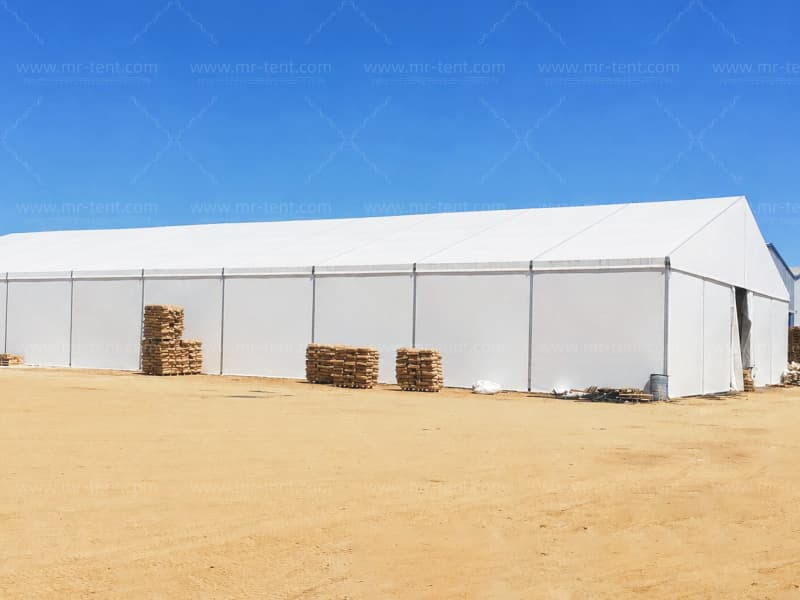
Warehouse Tent For Sale
Warehouse tents serve as flexible alternatives to traditional warehouses, featuring modular metal frames and weather-resistant fabric covers. They can be quickly assembled, disassembled and relocated without complex ground work. Boasting clear-span interiors, they suit storage, sorting and light work, with optional doors, windows and ventilation parts. More cost-effective than permanent buildings, they allow capacity expansion as needed. With proper anchoring and routine maintenance, these durable shelters are widely used across logistics, agriculture and construction to meet changing space demands.
If you are searching for a practical and flexible covered space solution for storage, logistics, or light operational work, a warehouse tent can serve as a reliable alternative to traditional permanent building structures. These fabric shelter systems are engineered to deliver large, unobstructed interior space without the lengthy construction cycles and heavy foundation work required for brick or metal warehouse buildings. The core framework is usually assembled from sturdy metal profiles that connect through simple joining components, allowing the whole structure to stand stable while keeping the overall weight far lower than conventional construction. The outer covering material is carefully selected to resist sunlight exposure, moisture accumulation, wind loads, and minor abrasion that comes from regular outdoor use. Unlike fixed buildings that lock you into one location for decades, this type of tent can be fully disassembled, transported, and rebuilt at a different site whenever your operational needs shift. Many businesses encounter sudden surges in inventory volume during busy seasons, and renting permanent space for short-term extra storage often creates unnecessary ongoing costs. A warehouse tent gives operators the freedom to add covered capacity exactly when it is needed, and scale back once the peak period ends. Even for long-term deployment, the adaptable design accommodates many different uses beyond basic storage, including temporary sorting zones, packaging stations, equipment shelter, and covered loading areas. Every component follows a modular layout, so users can extend or reduce the total floor area by adding or removing frame sections without redesigning the whole shelter. This level of flexibility makes the warehouse tent suitable for small operators and large-scale distribution activities alike, filling the gap between expensive permanent construction and flimsy temporary pop-up shelters that cannot sustain heavy daily use.
The assembly process for a warehouse tent is designed to avoid specialized heavy construction equipment and large teams of skilled tradespeople. Most sets arrive with pre-cut frame parts and prefabricated fabric panels, clearly shaped to fit together following a sequential installation pattern. Ground preparation remains relatively straightforward in most scenarios; a flat, solid surface is preferred, and anchoring methods can be adjusted to match the base surface, whether that is compacted gravel, concrete slabs, or paved yards. Workers can complete the build in a fraction of the time needed for standard warehouse construction, which means the usable space becomes available quickly to support incoming goods or ongoing work. Since no permanent ground modification is mandatory in many setups, the structure leaves little lasting change to the underlying ground once it is removed. During assembly, the fabric cover is stretched evenly over the finished frame and secured with integrated fasteners and tensioning systems, which prevent loose sagging that could trap rainwater or weaken the covering over time. Proper tension also helps the outer skin shed debris and precipitation smoothly, reducing the chance of pooled water creating extra weight on the roof. Even operators with limited experience handling large shelter systems can follow the included assembly guidance to coordinate installation, though having multiple people on hand speeds up the process significantly. Because the parts are interchangeable within the same series, replacing a damaged frame segment or a torn fabric panel does not require replacing the entire warehouse tent. This feature supports convenient maintenance and keeps downtime low if accidental damage occurs during daily operations.
Durability stands as one of the most important considerations for anyone planning to use a warehouse tent for regular commercial activity, and the design of these shelters prioritizes long-term performance under variable outdoor conditions. The metal frame undergoes surface treatment to slow down oxidation and corrosion, which is critical when the tent sits exposed to changing weather day after day. The fabric membrane is formulated to hold its structural strength over years of cyclic exposure to heat, cold, rain, and wind, resisting fading and material breakdown from consistent ultraviolet radiation. Manufacturers balance thickness and tensile strength so the cover remains tough enough for daily use without becoming unnecessarily heavy and difficult to handle during setup and takedown. Reinforced stitching runs along every seam and attachment point, as these areas face the highest stress from tension and wind movement. Corners and edge zones that are prone to rubbing or impact often receive extra reinforcing layers to prevent premature wear. While the shelter is engineered to handle typical outdoor weather patterns, users still benefit from basic routine checks after strong wind or heavy precipitation events to confirm anchoring points and fabric connections remain secure. Small signs of wear can be addressed early before they develop into larger failures that compromise the whole shelter. When maintained properly, a well-chosen warehouse tent can deliver years of dependable service, making it a worthwhile investment for anyone needing covered space that does not sacrifice resilience for mobility.
Interior usability is carefully considered in the overall design of warehouse tents, and the open internal layout creates continuous usable space free from numerous supporting posts that block movement and storage arrangement. The wide clear span allows forklifts, pallet jacks, rolling carts, and large stored items to move freely inside, which is essential for smooth loading, unloading, and inventory organization. Users can arrange racking systems, storage pallets, workbenches, and sorting lines according to their own workflow preferences, without being restricted by fixed internal supports. The height of the structure can be selected to match the size of stored goods and handling machinery, giving enough vertical clearance for stacked pallets and lifting equipment. Many warehouse tent designs also support optional add-on features that improve comfort and practicality inside the shelter. Roll-up fabric doors can be fitted along the side walls to create wide access points for vehicles and goods, while smaller entry doors support foot traffic. Transparent window panels can be inserted into the wall fabric to let natural daylight enter, cutting down on the need for artificial lighting during daytime hours. Ventilation accessories help regulate air flow inside the enclosed space, lowering the buildup of stale air, humidity, or dust that can affect stored materials and working conditions. These add-ons are modular just like the main tent structure, so buyers can select only the features that fit their specific operation rather than paying for elements they will never use.
Logistics and transportation of warehouse tent components are far simpler than moving prefabricated solid building sections, which is a major advantage for users who expect to relocate the shelter multiple times. After disassembly, the frame pieces stack neatly, and the fabric cover folds into compact bundles that fit onto standard transport vehicles. Individual parts are sized to avoid oversized shipping restrictions that complicate delivery and raise transport costs. Each component remains lightweight enough for manual handling when teams are loading and unloading, without requiring specialized lifting gear for every piece. This transport-friendly design opens up opportunities for seasonal operations, mobile project sites, and businesses that shift storage locations as supply routes and customer demand change. When the tent needs to be moved to a new site, every part can be inspected for wear while packed, and worn parts can be replaced before reassembly begins. Storage of the tent during periods when it is not in use also requires less dedicated space compared with idle permanent buildings. As long as the fabric is clean and fully dry before packing, it can be stored for extended intervals without rapid deterioration. The ability to pack, ship, and redeploy the warehouse tent efficiently makes it a highly agile asset, especially for teams that operate across multiple sites or respond to shifting market requirements.
Many buyers appreciate that warehouse tents offer a more controlled cost profile when compared with traditional construction projects, which often carry unexpected extra expenses as building work progresses. A warehouse tent solution allows users to gain substantial covered floor area with reduced upfront outlay, and there are no ongoing costs tied to permanent building upkeep such as roof resurfacing, exterior masonry repair, or fixed structural maintenance for heavy construction. Since expansion is achieved through adding modular sections, operators can expand their storage capacity gradually as the business grows, instead of committing funds to build a much larger facility all at once to accommodate future needs. This incremental approach matches spending directly to actual operational demand and avoids tying up capital in unused space. Even when the tent is kept in place for many years, maintenance expenses tend to stay predictable and limited mostly to occasional fabric inspection, frame cleaning, and replacement of small worn fasteners. There is no requirement for complex structural renovation work at regular intervals. Businesses can allocate their budget toward inventory, equipment, or staffing rather than construction overhead. This financial flexibility makes warehouse tents attractive to new ventures, growing enterprises, and established groups looking for a cost-conscious way to add covered workspace without overextending their resources.
Careful site planning helps users get the best performance and longest service life from a warehouse tent, and several straightforward factors should be evaluated before installation begins. The ground surface must provide stable support for the anchor points, and uneven ground should be leveled to prevent uneven stress across the frame and fabric cover. Drainage around the perimeter deserves attention too; standing water next to the tent walls can seep under the fabric edges and create damp conditions inside the shelter. It is wise to plan the orientation of access doors based on typical vehicle movement patterns and prevailing wind directions in the area, which can reduce wind force pushing against large flat fabric surfaces. Users should also map out internal workflows ahead of setup, deciding where storage racks, access openings, and work zones will sit so that the tent dimensions selected align perfectly with those plans. Clearance space around the outside of the tent is helpful for carrying out inspections, adjusting tension straps, and completing maintenance tasks without moving stored goods. Thoughtful site planning also includes considering nearby trees, overhead lines, or other obstacles that could interact with the shelter during wind events. Taking time to assess these details before assembly prevents operational disruptions later and ensures the warehouse tent functions safely and efficiently from the moment it is ready for use.
Safety features are integrated into the design of modern warehouse tents to support secure working and storage environments, and many of these features work alongside the flexible nature of the shelter system. The tensioned fabric cover and engineered frame distribute external loads evenly across the whole structure, preventing localized stress points that could lead to sudden failure. Anchoring systems hold the entire assembly firmly to the ground, and different anchoring options provide holding strength suited to different base surfaces and exposure levels. Brightly colored reinforcing webbing and heavy-duty fasteners are used at critical connection points so these high-load areas maintain reliability through repeated use. For work zones inside the tent, additional safety accessories can be incorporated, including cable routing fixtures to keep electrical lines secured and out of walkways, and boundary markers to define vehicle travel paths. The wide door openings support quick entry and exit for personnel and equipment, which improves movement flow during regular operations. Users still need to follow sensible operating practices inside the shelter, such as avoiding concentrated heavy loads directly on the fabric roof and keeping combustible materials managed appropriately. When operated following recommended usage guidelines, the warehouse tent creates a secure covered environment that protects goods and supports safe work activities for staff members.
The range of practical applications for warehouse tents extends well beyond simple dry goods storage, showing how versatile this shelter style truly is. Agricultural operators use these tents to protect harvested crops, farm machinery, feed supplies, and seasonal equipment from weather damage. Manufacturing teams set them up as temporary assembly bays, parts storage zones, and inspection areas when internal factory space is fully occupied. Logistics providers deploy them as overflow sorting hubs and covered loading zones to keep shipments protected while transfer operations continue through rainy or sunny weather. Event and rental companies store staging materials, seating, lighting rigs, and tent inventory within these shelters between bookings. Construction yards use warehouse tents to shield tools, building materials, and on-site office areas from the elements. Some operators also use them for vehicle storage, keeping fleets of work vehicles covered when no enclosed garage space is available. Because the interior environment can be adjusted with ventilation and lighting accessories, the shelter can adapt to items that need airflow protection as well as general dry storage. No matter the industry, the core advantage remains consistent: users gain a large, protected, configurable space that can adapt as activities change, without the rigidity and commitment of a fixed building.
When preparing to select a warehouse tent for your own operations, it helps to focus on matching the size, material specifications, and accessory options closely to your intended use case. Start by measuring the total floor area required to accommodate stored goods, handling equipment, and movement space, while accounting for potential future growth that may require adding extra sections. Think about the local weather conditions the tent will face throughout the year, as this informs the choice of fabric weight and frame specifications that will deliver reliable performance in your setting. Consider which access and ventilation options will support your daily workflow, deciding whether multiple roll-up doors, window panels, or airflow accessories are necessary. It is useful to confirm that all connecting parts and replacement components will remain available over time, so worn pieces can be sourced easily when maintenance is needed. Review guidance covering proper setup, tension adjustment, cleaning, and storage of the fabric cover, because consistent care directly impacts how long the shelter stays functional. A well-selected warehouse tent becomes more than just a temporary cover; it becomes a valuable operational asset that expands your usable space, adapts to shifting demands, and protects valuable inventory and equipment. With careful selection and regular simple upkeep, this type of shelter can serve your storage and workspace needs reliably for many years, offering a balanced combination of strength, mobility, and practical convenience that few other covered space solutions can match.