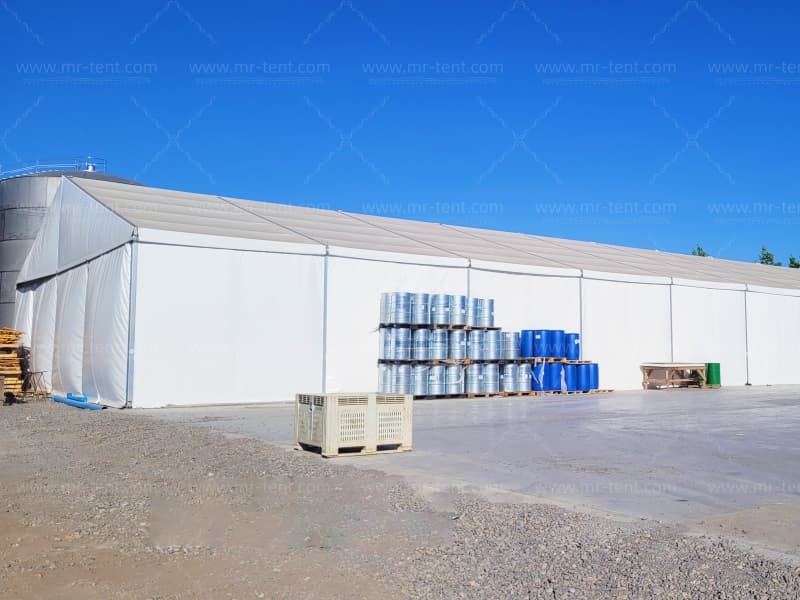
Warehouse Tent Manufacturer
Warehouse tent manufacturers provide flexible fabric storage structures as an alternative to fixed warehouses. Centred on users’ operational needs, they carefully select frames and fabrics, control production, organise logistics and offer installation guidance. They support customisation, scalability and after-sales maintenance, with modular designs allowing space expansion or reduction. These tents feature quick setup, low site impact and good reusability. Continuous technical optimisation helps firms gain adjustable storage capacity to adapt to changing supply chain and inventory demands.
The demand for flexible, large-scale covered storage solutions continues to grow across many industrial sectors, pushing more operators to seek reliable warehouse tent manufacturers that can deliver adaptable structures suited to ever-changing operational needs. Unlike permanent brick-and-mortar warehouses that require lengthy construction cycles and heavy upfront investment, these fabric-based warehouse tents offer a practical alternative that balances usable space, mobility and functional performance. A professional warehouse tent manufacturer starts every project by focusing on the core operational realities of the end user, taking time to understand how the space will be used, what types of goods will be stored inside, and what environmental conditions the finished tent must withstand. This early consultation stage is not simply about selecting a basic frame and cover material; it is about mapping out workflow patterns, access routes for vehicles and personnel, loading zones, and internal layout requirements that directly influence the final design. Many businesses underestimate how much a poorly tailored tent design can slow down daily operations, leading to cramped movement, inefficient stacking, or gaps in protection for sensitive inventory. Skilled manufacturers avoid these pitfalls by building designs around real on-site conditions rather than relying on generic one-size-fits-all templates. They consider factors such as ground surface type, available clearance for forklifts, preferred entry configurations, and the need for integration with existing site infrastructure. Even small details, such as the placement of roll-up access openings or internal bracing points, are adjusted to fit the user’s routine. The best manufacturers view each warehouse tent as a custom engineered space rather than a simple shelter, ensuring that the finished product supports consistent, smooth work activity from the day it is installed. This user-centred approach separates experienced providers from casual suppliers who only offer pre-made units with limited room for adjustment, and it creates a foundation for long-term satisfaction with the temporary or semi-permanent storage solution.
Material selection stands as one of the most critical responsibilities handled by a warehouse tent manufacturer, as the quality of frame and fabric components defines the overall durability, safety and service life of the finished structure. The supporting frame forms the skeleton of the tent system, and reputable manufacturers source materials that combine high strength with manageable weight, allowing for straightforward transport, assembly and potential relocation when operational requirements shift. Each frame component is processed carefully to reduce the risk of corrosion and wear during prolonged outdoor exposure, with surface treatments designed to resist gradual degradation from moisture and airborne contaminants. Fabric covers, meanwhile, are chosen based on the intended use of the warehouse space, with different formulations offering varied levels of resistance to sunlight, moisture, abrasion and temperature fluctuation. Manufacturers test how these fabrics perform under extended exposure, checking for stretching, fading, tearing and water penetration to ensure consistent performance over years of use. They also evaluate how the fabric interacts with the frame system, designing secure attachment points that distribute tension evenly across the entire cover surface. Uneven tension is a common source of premature fabric damage, so precise cutting and reinforced seam construction are standard practices in high-quality production. Additional fabric features can be incorporated according to user needs, including options that reduce heat buildup inside the storage area or limit dust infiltration to protect stored goods. Manufacturers balance material performance with practical concerns such as ease of cleaning and repairability, so that minor damage can be addressed on site without requiring full replacement of the cover. Careful material curation does not eliminate maintenance entirely, but it drastically lowers the frequency of major repairs and prevents unexpected failures that could put stored inventory at risk. Every material choice is made with the full lifecycle of the warehouse tent in mind, from initial fabrication through repeated use and eventual disassembly.
Production workflows within a warehouse tent manufacturer’s facility are structured to maintain consistent quality while retaining the flexibility needed to accommodate custom design requests. The process begins after design finalisation, when technical drawings are converted into detailed production instructions for cutting, shaping and assembling each component. Production teams follow controlled sequences to prepare frame parts, fabric panels and all supporting hardware, with regular checks at key stages to verify dimensions, fit and finish. Fabric cutting relies on precise measurement controls to ensure every panel matches the design specifications, because even small discrepancies can create alignment issues during on-site installation. Seam work receives close attention, as weak seams are among the most common points of failure for fabric structures. Manufacturers use suitable joining methods matched to the fabric type, creating sealed, sturdy seams that maintain integrity under tension and weather exposure. Frame fabrication includes cutting, shaping and surface treatment steps, followed by fitting checks to confirm that connecting joints lock together smoothly and securely. Hardware such as fasteners, tensioning components and anchoring accessories are grouped and labelled systematically so that every part required for a build arrives together at the project location. Organised production also means that orders can be staged efficiently, allowing manufacturers to manage multiple projects at once without mixing up components for different tent sizes or configurations. Quality checks do not only happen once at the end of production; inspectors revisit work after each major stage to catch errors early, reducing waste and preventing defective parts from moving forward. This disciplined production rhythm supports reliable lead times, giving customers clearer visibility into when their warehouse tent system will be ready for shipment and installation. The goal of this structured workflow is to deliver complete, coherent tent kits that fit together reliably when they reach the worksite, minimising delays and complications during setup.
Logistics and packaging planning represent another core capability of a capable warehouse tent manufacturer, especially given the large, bulky nature of tent frames and fabric covers. Once production and internal inspection are complete, every component must be packaged in ways that protect it during transit, whether the shipment travels over short distances or through extended transport chains. Frame sections are bundled and protected against scratches and impact damage, while fabric panels are folded or rolled carefully to avoid sharp creases that could weaken the material or create permanent marks. Hardware sets are sealed inside labelled containers to prevent small fasteners and fittings from becoming lost amid larger components. Manufacturers take care to arrange packaging so that unloading crews can identify contents easily, grouping related parts together in logical sets that match the sequence of installation. They also calculate packaging dimensions and weights thoughtfully, helping to optimise loading space on transport vehicles and avoid unnecessary shipping costs. Clear documentation is packed alongside each tent kit, including assembly guides, component lists and basic care instructions, written in straightforward language to support installation teams. Even with thorough packaging, manufacturers recognise that rough handling can occur during transit, so they build in protective buffers around vulnerable parts. Communication around shipment scheduling is maintained to align delivery timelines with site readiness, ensuring that the customer’s team has space and labour available to receive goods when they arrive. A well-managed logistics process reduces the chance of missing parts or damaged items upon arrival, which would otherwise hold up the start of installation. For customers, smooth delivery means less downtime between placing an order and gaining access to usable covered storage space, making logistics expertise a quiet but essential part of the manufacturer’s overall service offering.
On-site installation guidance forms a key part of the service package provided by a warehouse tent manufacturer, recognising that careful assembly directly impacts how well the structure performs over time. While some customers choose to handle installation with their own crews, manufacturers provide comprehensive guidance to walk installers through each stage of the build process. The guidance covers site preparation first, outlining what ground preparation work should be completed before any components arrive, including ground levelling, clearance checks and planning for anchoring arrangements. Proper anchoring is critical for stability, and manufacturers explain different anchoring approaches suited to various ground surfaces, helping users select an approach that fits their site without compromising stability. Assembly instructions break the build into sequential steps, starting with frame layout, moving through frame erection, and finishing with fabric fitting, tension adjustment and accessory installation. Emphasis is placed on achieving uniform fabric tension, because over-tightening can stress seams and fabric while insufficient tension allows flapping that accelerates wear. Guidance also covers safety considerations for the installation team, including safe working practices when lifting frame sections and working at height. Many manufacturers offer optional support from experienced field technicians who can supervise the installation process, answer questions in real time and resolve unexpected site challenges. This hands-on support proves especially valuable for larger, more complex warehouse tent layouts with multiple connected sections, specialised door systems or custom internal fixtures. Once assembly is finished, the manufacturer’s guidance includes a final inspection checklist to verify that all connections are secure, fabric is seated correctly, and access points operate smoothly. Completing this post-installation check helps catch minor issues before they develop into bigger problems after the tent enters active use. Strong installation support ensures that the engineered design intent is fully realised on site, rather than undermined by incorrect assembly practices.
Customisation options offered by a warehouse tent manufacturer allow businesses to adapt their covered storage space to match highly specific operational workflows, moving far beyond simple rectangular shelter designs. Many users require openings sized to accommodate heavy industrial vehicles, wide loading bays or continuous access along one side of the tent, and manufacturers can integrate different types of closure systems to suit these needs. Some operations benefit from partition walls inside the tent, creating separate zones for incoming goods, quality checks, finished product storage or equipment parking, without building permanent dividing structures. Height adjustments are another frequent custom request, as operations handling tall stacked pallets or large machinery need greater internal clearance than standard tent dimensions provide. Manufacturers can also design connected tent systems that link multiple covered areas together, creating sprawling storage campuses that expand incrementally as business volume grows. Additional accessory integration includes ventilation setups, lighting mounting points and protective skirt systems along the base of the tent to limit dust, debris or pest movement into the storage zone. Each custom modification is evaluated by the manufacturer’s technical team to confirm that changes do not compromise the overall structural balance of the tent. For example, adding a large uninterrupted opening requires adjustments to framing and bracing around that area to maintain stability. Customisation does not mean abandoning predictable performance; instead, it means reshaping the tent layout around the user’s workflow rather than forcing the workflow to fit a fixed structure. This flexibility is one of the primary reasons warehouse tents appeal to growing businesses, seasonal operators and projects with shifting space requirements. A manufacturer skilled at customisation listens closely to operational constraints and translates those needs into practical, workable design adjustments that add tangible value to the finished storage space.
Ongoing maintenance guidance and after-sales support distinguish thoughtful warehouse tent manufacturers from suppliers who consider their responsibility complete once the tent is delivered and assembled. Fabric and frame structures benefit from regular, simple upkeep, and manufacturers share clear guidance on routine inspection schedules and care procedures. Users learn how to examine fabric surfaces for small tears, abrasions or loose stitching, and how to check frame joints, fasteners and anchoring points for loosening or corrosion over time. They also receive advice on appropriate cleaning methods for the fabric cover, avoiding harsh treatments that could degrade the coating or weaken the material. Guidance covers seasonal checks as well, reminding users to clear accumulated debris from the roof surface and inspect tension after periods of strong wind or extreme weather. When damage does occur, manufacturers can supply matching replacement fabric panels, frame parts or hardware, so repairs use components consistent with the original build. This compatibility is important, as mismatched replacement materials can create weak points or uneven appearance and performance. Support channels are maintained to answer technical questions that arise months or years after purchase, whether the user needs help troubleshooting a stuck access door, adjusting fabric tension or planning a relocation of the tent. Some users decide to disassemble and move their warehouse tent to a new site, and manufacturers can provide updated guidance for safe disassembly, component storage and re-erection at the new location. This reusability is a major advantage of tent-style warehouse structures, and good after-sales support helps users take full advantage of that benefit. After-sales care is not just about fixing problems; it helps owners extend the usable life of their investment and keep the storage space operating reliably through years of changing business activity.
Scalability is a central advantage promoted and enabled by experienced warehouse tent manufacturers, addressing the uncertainty many businesses face when forecasting storage needs. Traditional warehouse construction locks operators into a fixed footprint for many years, which can leave a business paying for unused space during slow periods or facing shortages when demand spikes. Warehouse tent systems, by contrast, are built in modular sections that can be extended by adding extra frame bays and fabric panels when more storage room is required. A manufacturer designs the core structure with future expansion in mind, ensuring that connection points between sections are engineered for seamless joining later on. This means a business can start with a modest tent footprint to meet immediate needs and expand gradually as inventory levels, product lines or order volumes increase. Scalability also works in reverse: sections can be disassembled and removed if storage requirements shrink, freeing up ground space for other activities without leaving behind a permanent unused building. This ability to adjust capacity aligns well with seasonal industries, project-based work and growing enterprises that prefer to match their covered space closely to current demand. Manufacturers work with customers to outline long-term expansion possibilities during the initial design phase, so the first tent installation is compatible with planned future additions. They document component specifications clearly so that extension kits ordered years later match the original structure’s frame profile and fabric type. The scalable nature of these structures lowers the risk associated with investing in storage capacity, because the user is not committing to a permanent, inflexible asset. For many operators, this ability to scale up or down efficiently is the deciding factor when choosing a warehouse tent over a fixed building.
Environmental and operational efficiency considerations are embedded into the design approach of a responsible warehouse tent manufacturer, helping users create storage spaces that work efficiently without unnecessary resource consumption. The lightweight construction of tent systems means site preparation work is far less intensive than what is required for a permanent warehouse, reducing ground disturbance and the materials needed for foundation work. Installation is completed much faster, cutting down on the energy and labour associated with long construction projects. Fabric cover options can be selected to manage internal temperature, reducing the heat buildup that would otherwise make enclosed storage spaces uncomfortable or damaging for temperature-sensitive goods. Improved internal conditions can lower reliance on auxiliary cooling systems in hot weather and help retain heat where gentle temperature control is needed. The modular design also supports efficient space use, because tents can be placed selectively on a site, covering only the exact zones that require shelter rather than developing large paved or built areas across the whole property. When a tent reaches the end of its usable life, many of its component materials can be processed for recovery, diverting material away from waste streams when handled properly. Manufacturers also look for ways to reduce waste during their own production processes, optimising fabric cutting patterns to minimise offcuts and reusing suitable leftover materials where possible. While warehouse tents are not intended to replicate every performance feature of a purpose-built permanent warehouse, they offer a lower-impact alternative for many storage scenarios. By prioritising efficient use of materials, fast deployment and adjustable coverage, these structures help businesses meet storage goals with a smaller environmental footprint compared to traditional construction routes. This focus on practical efficiency resonates with operators aiming to manage both operational costs and environmental impact across their supply chain and site activities.
Looking ahead, the role of the warehouse tent manufacturer will continue to evolve as industrial operations adapt to faster supply chain shifts, variable inventory patterns and rising interest in flexible asset strategies. More businesses recognise that agility in storage capacity is a strategic advantage, and fabric-based covered structures offer one of the most direct ways to build that agility into site operations. Manufacturers will keep refining their designs by drawing on real-world feedback from users operating in a wide range of settings, improving frame geometry, fabric performance and connection systems to boost durability and ease of handling. They will also develop more integrated accessory packages that make warehouse tents capable of supporting increasingly complex workflows, moving beyond basic dry storage to accommodate staging, packaging, maintenance and temporary manufacturing activities. The core value proposition remains unchanged, however: delivering adaptable, rapidly deployable covered space that aligns with dynamic business needs. Successful manufacturers will stay focused on understanding user workflows, maintaining rigorous control over materials and production, and delivering dependable support from the first design discussion through years of ongoing use. As market expectations shift, the best providers will not simply sell tent structures; they will deliver complete flexible storage solutions that grow, move and adjust alongside the businesses that rely on them. This steady focus on practical, user-centred engineering ensures that warehouse tents will remain a vital option for operators seeking reliable storage without the rigidity and long lead times of traditional construction, solidifying the manufacturer’s place as a key partner in modern industrial space planning.