Tent Manufacturer
Tent manufacturing is a sophisticated, detail-oriented industry focused on designing and producing versatile, durable shelter structures tailored for diverse outdoor and commercial usage scenarios. Beyond simple fabric assembly, the entire production process integrates innovative material selection, precision structural design, rigorous craftsmanship, and multi-layer quality optimization to create tents that balance portability, weather resistance, and long-term usability. Modern tent production abandons crude traditional making methods, adopting standardized refined workflows from initial design iteration, raw material screening, and precision cutting to professional sewing, structural reinforcement, waterproof treatment, and systematic performance testing. Every production link is refined to adapt to complex outdoor environments, meeting the differentiated demands of casual camping, outdoor exploration, temporary commercial events, and emergency shelter needs while ensuring stable product quality and excellent user experience in various application scenarios.
The foundation of high-quality tent manufacturing lies in scientific and meticulous raw material selection, which directly determines the core performance and service life of finished tents. Fabric selection is the most critical link, as different usage scenarios require fabrics with distinct functional attributes. Manufacturers prioritize high-density textile materials that feature excellent tear resistance, tensile strength, and environmental adaptability. These fabrics undergo professional surface treatment processes to gain effective water repellency, anti-ultraviolet capability, and mildew resistance, enabling them to withstand prolonged exposure to sunlight, rain, and humid outdoor conditions without aging or performance degradation. In addition to outer fabrics, inner lining materials are carefully chosen to deliver soft touch, breathability, and comfort, preventing stuffiness during long-term use while avoiding condensation accumulation inside the tent. Supporting component materials are equally strictly screened, with lightweight yet high-strength materials selected for tent brackets to reduce overall product weight without sacrificing structural stability, and durable anti-rust accessories adopted to adapt to long-term outdoor placement and repeated disassembly and assembly.
Before formal mass production, professional design and prototype development work serves as the core prerequisite for qualified tent production, guiding all subsequent production procedures. Design teams start with in-depth market demand research, sorting out user pain points such as poor ventilation, inconvenient assembly, insufficient space, and weak wind resistance in traditional tent products. Based on real usage needs, designers optimize tent spatial structure, streamline internal layout, and adjust radian and proportion of the overall shape to enhance space utilization and wind and rain resistance. Every structural detail is fully considered, including reserved ventilation windows, door and window opening modes, internal hanging structures, and ground edge wrapping designs. After completing the digital design scheme, manufacturers produce physical prototypes for preliminary manual assembly and simulation usage tests. The prototype undergoes repeated structural adjustments and detail polishing to eliminate design defects such as unbalanced stress, inconvenient operation, or unreasonable space layout, ensuring the finalized design scheme is practical, stable, and user-friendly before entering formal production.
Precision cutting processing is a key preliminary production step that ensures standardized tent assembly and neat appearance, laying a solid foundation for subsequent sewing work. After confirming the final design scheme, staff split the tent’s overall fabric structure into multiple independent fabric panels according to structural requirements, marking accurate cutting sizes and reserved sewing margins for each panel. Advanced automated cutting equipment is widely adopted in modern manufacturing to replace traditional manual cutting, effectively improving cutting accuracy and consistency. The equipment precisely cuts various fabrics according to preset data parameters, avoiding size deviation, irregular edges, or fabric waste caused by manual operation differences. During the cutting process, staff classify and label all cut fabric panels by parts, sorting them in assembly order to prevent mixing or loss of different components. Meanwhile, defective fabrics with scratches, thin spots, or uneven coating are screened out in real time to ensure all raw materials entering the sewing link meet quality requirements and maintain unified product specifications.
Professional sewing technology and standardized assembly processes are central to shaping the overall structure of tents, directly affecting product firmness and durability. Tent sewing differs greatly from ordinary textile sewing, requiring higher stitch density, uniform tension, and targeted reinforcement treatment for stress-bearing parts. Workers use specialized industrial sewing machines equipped with matched needles and stitch parameters suitable for thick outdoor fabrics, ensuring smooth stitching without fabric damage or thread breakage. For key stress-bearing positions such as tent corners, bracket connection points, and door and window edges, double-layer or multi-layer sewing and dense stitching are adopted to enhance tensile resistance and prevent cracking during use. After sewing independent fabric panels, workers assemble each component in a fixed process order, connecting the top surface, side walls, bottom edges, and auxiliary structures of the tent. All assembly joints are carefully sorted and flattened to avoid wrinkling or uneven stress, ensuring the overall structure of the tent is neat, compact, and structurally stable after assembly.
Seam treatment and functional surface finishing are essential processes to enhance tents’ weather resistance and solve the natural defects of sewn fabrics. Mechanical sewing inevitably leaves tiny needle holes and stitching gaps on fabric surfaces, which are the main weak points for water seepage and air leakage. To eliminate these hidden dangers, manufacturers conduct professional seam taping treatment on all stitching positions. Through precise temperature and pressure control, special waterproof adhesive tapes are firmly attached to the inner side of seams, completely covering needle holes and stitching gaps to form a closed waterproof barrier. In addition to seam sealing, overall functional finishing is carried out on tent fabrics, supplementing and optimizing surface protective performance. The finishing process enhances the fabric’s water repellency, anti-ultraviolet aging, and anti-mildew properties, making the tent adaptable to harsh outdoor environments. All finishing work follows refined process standards to avoid uneven coating or adhesive bubbling, ensuring long-term stable functional effects without peeling or failure after repeated use and cleaning.
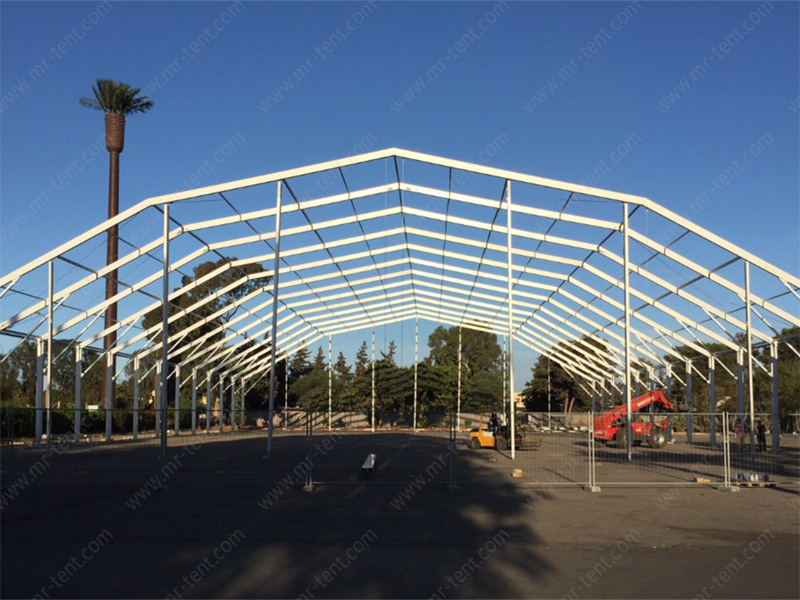
The production and matching assembly of tent support structures determine the overall stability and shaping effect of finished tents, serving as the skeleton of tent products. Support structures mainly include tent poles, connecting joints, fixed brackets, and auxiliary supporting parts, all of which undergo independent refined processing. Pole materials are processed through precise cutting, shaping, and surface polishing to ensure smooth surfaces, uniform thickness, and consistent radian, avoiding burrs or structural deviations that affect assembly. Connecting joints are precisely matched in size to ensure tight insertion and flexible disassembly, while maintaining firm connection without loosening after bearing external force. After processing all support components, workers conduct trial assembly of the entire support system to check the coordination degree of each part, eliminate assembly jams or unstable connections, and adjust component tightness and stress-bearing uniformity. The matched support structure can evenly disperse external wind pressure and gravity, enabling the tent to maintain a neat three-dimensional shape and stable state in windy and rainy weather, avoiding collapse or deformation.
In-process quality inspection runs through the entire tent manufacturing process, achieving real-time risk control and ensuring no defective products flow into subsequent links. Different from final single inspection, in-process inspection sets up multiple quality checkpoints covering raw material feeding, fabric cutting, sewing assembly, seam treatment, and support processing. Professional inspectors conduct sampling and full inspection of semi-finished products at each stage, focusing on checking fabric integrity, cutting size accuracy, stitching firmness, seam sealing tightness, and support component matching accuracy. Once partial defects such as loose stitching, incomplete taping, or component size deviation are found, products are immediately returned for rework and correction, and defect causes are recorded and summarized to avoid repeated problems in subsequent production. This full-process inspection mode effectively controls product quality from the source, reduces overall defective rate, and ensures the consistency and stability of batch product quality.
Simulated environment performance testing is a key link to verify the practical applicability and durability of tents, transforming production quality standards into real usage performance. After completing preliminary assembly and finishing of finished tents, manufacturers conduct multiple professional simulation tests to replicate various outdoor usage environments. Water resistance tests simulate continuous rainfall and water spraying scenarios to check whether tent surfaces and seams have water seepage or water accumulation problems, verifying the effectiveness of waterproof treatment. Wind resistance tests apply continuous and intermittent external wind pressure to detect whether the tent structure is stable, whether support components are deformed, and whether stitching joints are cracked. In addition, aging resistance tests are carried out through long-term light exposure simulation to assess the fabric’s anti-ultraviolet and anti-aging capabilities. All test results are recorded in detail, and products that fail to meet usage performance requirements are optimized and adjusted again to ensure finished tents can adapt to complex and changeable outdoor weather conditions.
Fine final finishing and standardized packaging processes improve the overall grade and delivery quality of tent products, providing users with complete and usable finished products. Before formal packaging, workers conduct overall finishing and cleaning of each finished tent, removing surface dust, residual threads, and processing stains, and checking all details again to confirm no missing parts, unqualified stitching, or incomplete functional treatment. Tiny flaws such as loose threads are trimmed, and uneven parts are sorted and shaped to ensure the tent has a neat appearance and perfect structure. After finishing, the tent is folded and sorted according to scientific folding methods, which not only reduce product volume for easy storage and carrying but also avoid long-term fabric crease deformation. All matching accessories including fixed ground nails, wind ropes, storage bags, and usage instructions are sorted completely and matched one by one. Finally, products are packaged in standardized outer packaging to prevent extrusion, friction, and moisture damage during transportation and storage, ensuring intact product delivery.
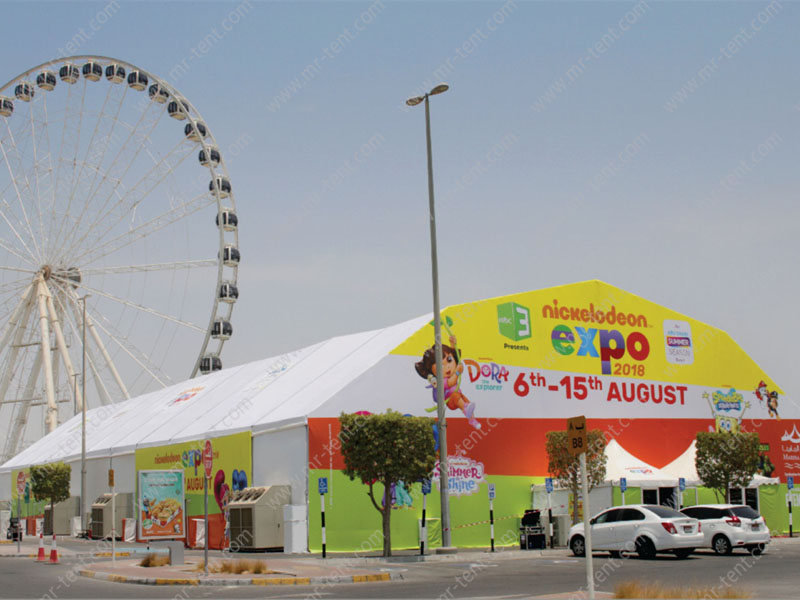
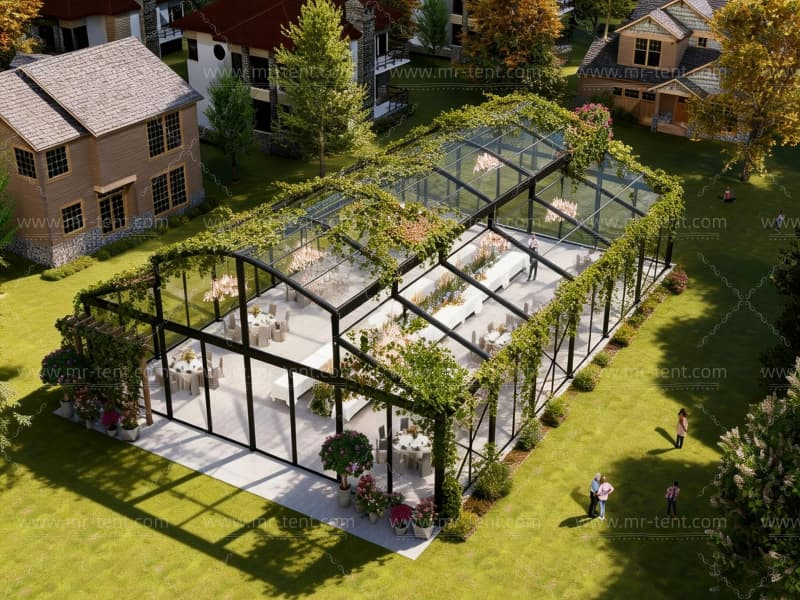
Customized production capability is an important advantage of modern tent manufacturing, meeting the personalized and diversified needs of different user groups and usage scenarios. Different from unified standard product production, customized manufacturing starts with in-depth communication with users to clarify core demands including usage environment, spatial size, functional configuration, and appearance design. Manufacturers provide targeted design and production solutions according to personalized needs, such as expanding internal space for large-scale event tents, increasing ventilation and heat dissipation structures for summer camping tents, and strengthening wind and snow resistance for high-altitude outdoor tents. In terms of appearance, personalized color matching, pattern design, and structural optimization can be carried out according to user preferences and usage scenarios. During customized production, the original standardized quality control system is still strictly implemented to ensure personalized products maintain stable quality, reliable performance, and exquisite craftsmanship, realizing the perfect combination of personalized demand and professional manufacturing quality.
Continuous technological iteration and service optimization drive the long-term development of the tent manufacturing industry, enabling products to constantly adapt to upgrading market demands and outdoor usage scenarios. Manufacturers keep focusing on industry technological innovation, actively introducing new lightweight, high-strength, and environmentally friendly materials to reduce product weight, improve durability, and enhance environmental protection performance. Production processes are continuously optimized and upgraded, with intelligent production equipment and refined management modes adopted to improve production efficiency, reduce manual errors, and stabilize batch product quality. Meanwhile, manufacturers establish a complete post-production service system, collecting user feedback on product usage experience, existing defects, and optimization suggestions in a timely manner. Based on market feedback and usage data, product design and production processes are continuously improved to solve user usage pain points. Through technological innovation, process optimization, and service improvement, tent manufacturing constantly upgrades product performance and user experience, providing more reliable, comfortable, and diversified shelter solutions for all outdoor usage scenarios.