Industrial Tent
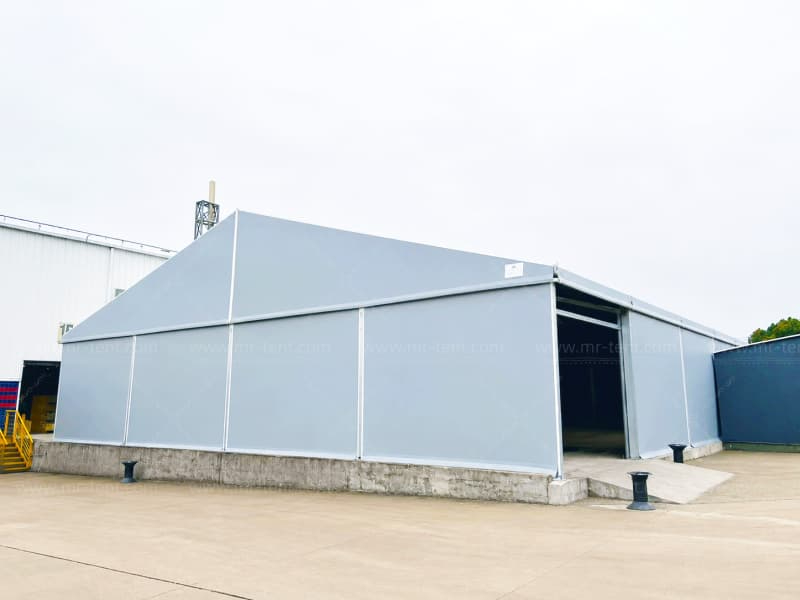
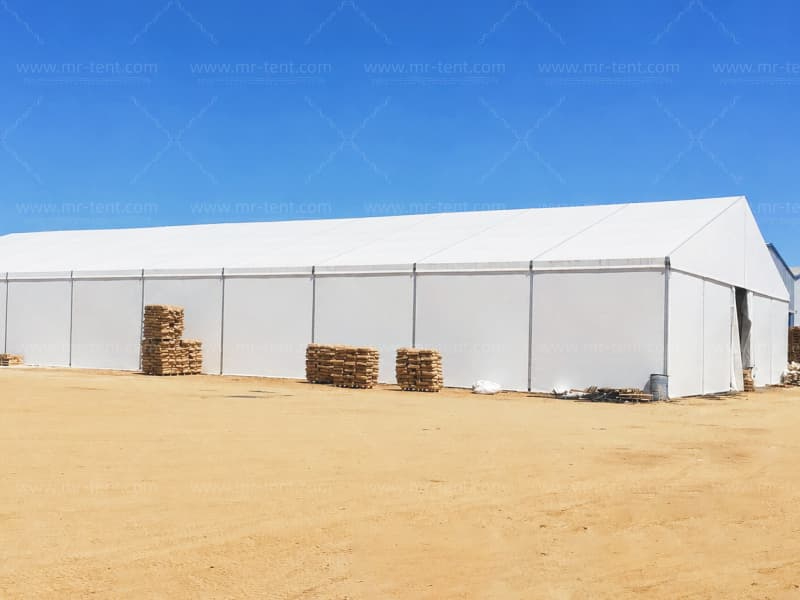
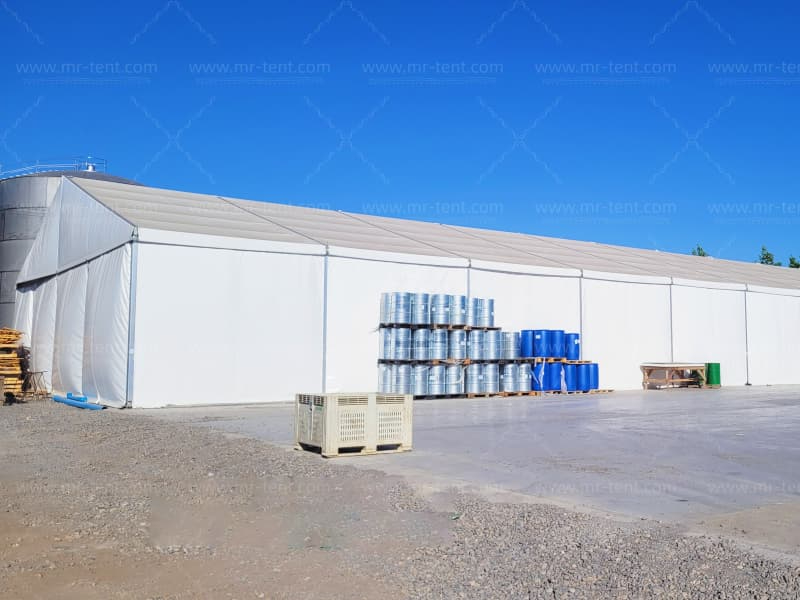
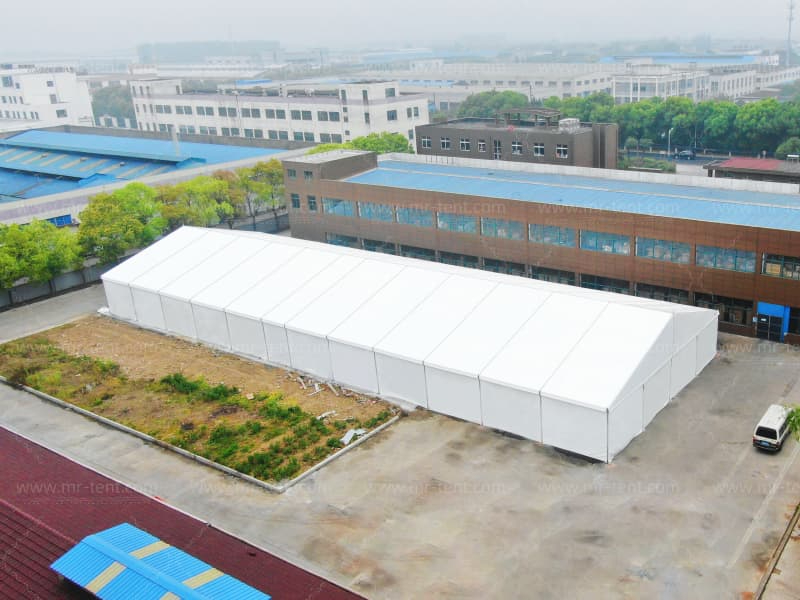
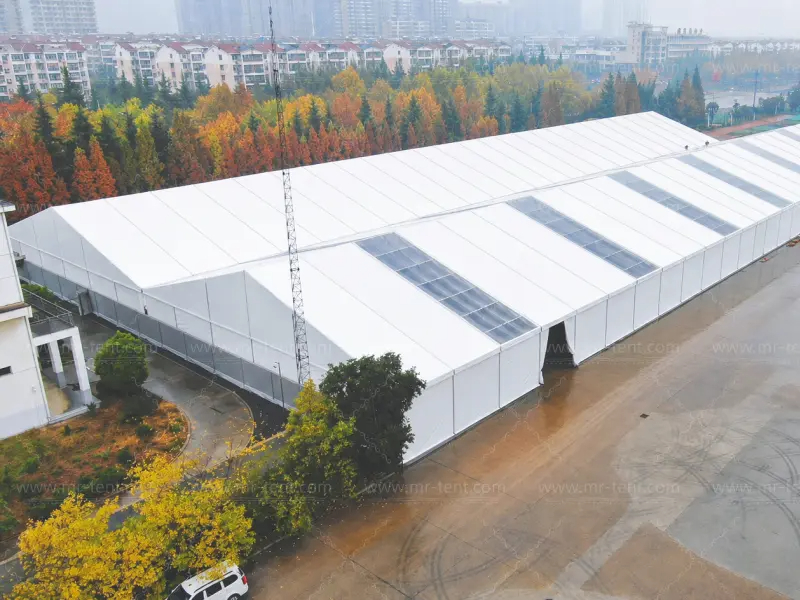
Industrial tents have emerged as versatile, cost-effective, and flexible temporary structural solutions widely adopted across diverse industrial and commercial sectors. Unlike fixed permanent buildings, these portable fabric structures are designed to deliver rapid deployment, adaptable space utilization, and robust environmental protection without lengthy construction cycles or heavy infrastructure investment. They serve a broad spectrum of practical purposes, including temporary warehousing, on-site workshop expansion, outdoor project operation coverage, equipment storage, and staff working shelters for construction, logistics, manufacturing, and event industries. Engineered with durable frame materials and high-performance waterproof, wind-resistant, and UV-protective fabrics, modern industrial tents balance structural stability and portability perfectly. Their customizable size, shape, and functional design enable them to adapt to various site conditions and operational demands, making them an indispensable auxiliary facility for modern industrial production and temporary business activities worldwide.
The core value of industrial tents lies in their exceptional flexibility in spatial arrangement and application scenarios, which distinguishes them profoundly from traditional fixed buildings. In modern industrial operations, production and storage demands often present dynamic fluctuations due to seasonal production peaks, project cycle changes, and market order adjustments. Fixed factory buildings and warehouses are limited by fixed floor areas and construction positions, unable to respond quickly to sudden space shortages or temporary site layout adjustments. Industrial tents fill this market gap perfectly, as they can be freely assembled, disassembled, and relocated according to actual operational needs. Whether it is expanding storage space for sudden material inflows, building temporary processing workshops for short-term engineering projects, or setting up transit shelters for on-site cargo sorting, these tents can complete layout deployment in a very short time. Moreover, their modular assembly structure allows for flexible expansion or reduction of internal space by increasing or decreasing frame and fabric components, fully matching the variable space requirements of different industrial links. This high degree of flexibility enables enterprises to optimize site utilization, avoid idle space waste, and greatly improve the efficiency of industrial space allocation.
Structural durability and environmental adaptability are key advantages that support the long-term service of industrial tents in complex industrial environments. The main support frame of qualified industrial tents is made of high-strength alloy materials, which feature light weight, high hardness, and strong compression and impact resistance. This frame structure is scientifically designed with reasonable stress distribution, effectively resisting external forces such as strong winds and accumulated snow, and maintaining overall structural stability in harsh outdoor environments. The outer covering fabric is processed with multiple special technologies, possessing excellent waterproof, rainproof, sun-proof, and anti-aging properties. It can effectively block ultraviolet radiation, prevent rainwater penetration, and resist erosion from dust, industrial floating debris, and other pollutants in industrial sites. In addition, the fabric material has good tear resistance and low-temperature resistance, avoiding brittle cracking in cold weather and aging damage under long-term sunlight exposure. The connection parts of frames and fabrics are precisely optimized to reduce gaps and prevent wind and water leakage. With reliable structural performance, industrial tents can stably serve outdoor industrial sites all year round, providing a safe and closed operating space for equipment, materials, and staff.
Industrial tents bring remarkable economic benefits to enterprises through low investment cost and zero long-term maintenance pressure. Constructing traditional industrial buildings requires multiple links including site planning, foundation construction, wall and roof building, and later decoration, which involves huge capital investment, long construction cycles, and complicated approval procedures. In contrast, industrial tents adopt a lightweight assembly design, eliminating the need for complex foundation treatment and permanent construction procedures. The overall input of materials and construction labor is far lower than that of fixed buildings, greatly reducing the initial capital pressure of enterprises. In terms of later use, industrial tents have no high daily maintenance costs like factory buildings, such as wall renovation, roof waterproof repair, and structural rust removal. Daily maintenance only requires simple cleaning of the fabric surface and regular inspection of frame tightness, with low time and capital costs. In addition, the reusable characteristics of industrial tents further improve economic efficiency. After the completion of temporary projects or the adjustment of enterprise site layout, the tents can be completely disassembled, stored, and reused in subsequent projects, avoiding resource waste caused by one-time use. This cost-saving advantage makes industrial tents the preferred choice for small and medium-sized enterprises and large enterprises’ temporary project layout.
The rapid deployment capability of industrial tents greatly improves the operational efficiency of emergency and short-term industrial projects. In many industrial scenarios, enterprises often face urgent space demands that need to be solved within a short time, such as emergency material storage after equipment overhaul, temporary operation shelters for sudden engineering projects, and transit warehouses for urgent cargo distribution. Traditional building construction is restricted by construction cycles and cannot meet emergency timeliness requirements, while industrial tents can achieve rapid on-site assembly with mature modular components. All accessories of industrial tents are prefabricated in factories with standardized specifications, and on-site assembly only requires simple splicing and fixing without professional construction equipment and complex construction processes. A complete medium-sized industrial tent can be deployed and put into use within one to two days, and small-sized tents can be completed in several hours. This ultra-fast deployment speed enables enterprises to quickly respond to emergency production and operation demands, shorten project preparation cycles, reduce waiting time costs, and ensure the smooth progress of industrial projects. Meanwhile, the disassembly process is equally efficient, which will not cause delayed site clearance and affect the follow-up site layout and construction progress.
Customization diversity enables industrial tents to adapt to differentiated functional demands of various industries. Different industrial fields have distinct requirements for the space function, internal configuration, and overall specification of temporary shelters. For the logistics and warehousing industry, industrial tents can be customized with heightened internal space and smooth ground adaptation design to meet the entry and operation demands of forklifts, pallet trucks, and other handling equipment, and can be equipped with ventilation windows and dust-proof curtains to ensure the dry and clean storage environment of goods. For the construction industry, tents can be designed with wind-enhanced structures and rain-proof optimization to serve as temporary material warehouses, staff rest rooms, and on-site office areas, adapting to the messy and variable construction site environment. For the manufacturing industry, large-span industrial tents without internal support columns can be customized to provide open and uninterrupted operating space for large-scale equipment debugging and product processing. In addition, enterprises can also adjust the tent’s color, heat insulation performance, and lighting configuration according to actual needs, realizing personalized functional customization to fully match the refined operation demands of different industrial scenarios.
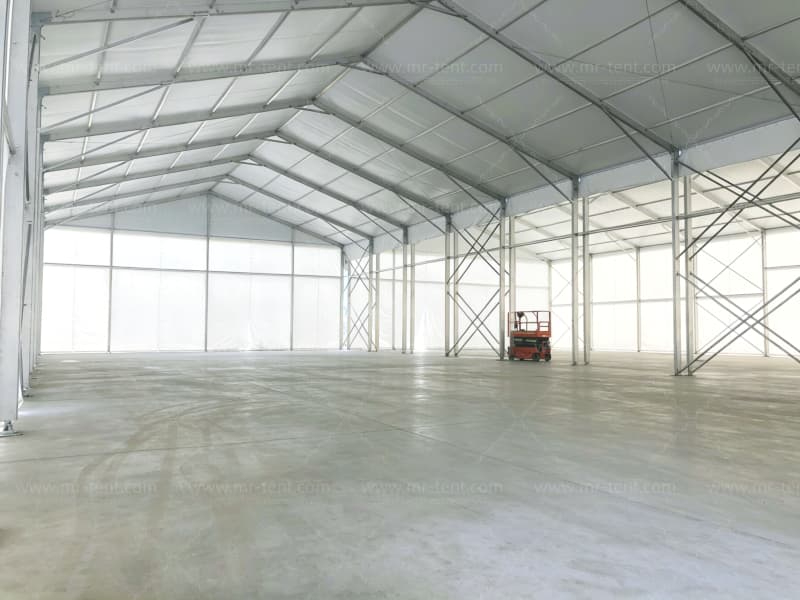
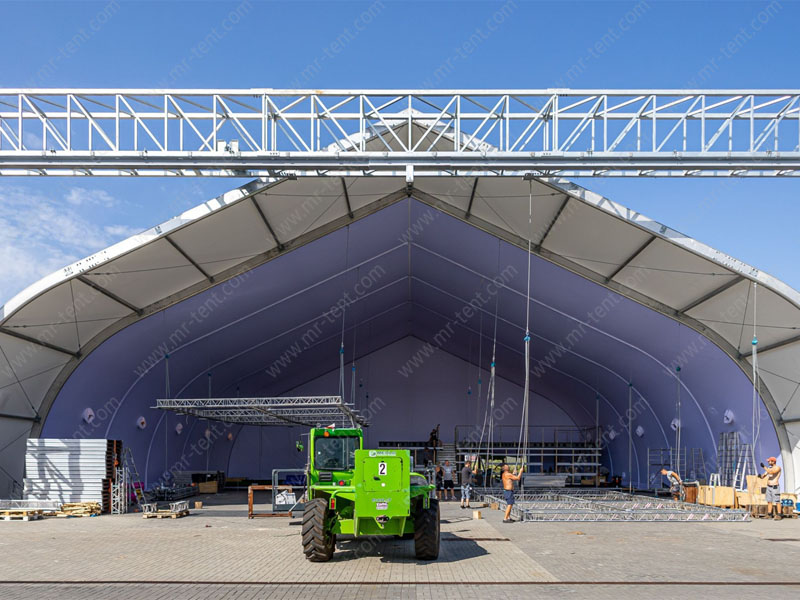
Industrial tents have excellent space utilization efficiency, which maximizes the release of site space value. Traditional temporary buildings usually have fixed structural partitions and internal support facilities, resulting in many dead spaces that cannot be fully utilized, and the internal layout is difficult to adjust flexibly. Industrial tents adopt a large-span integral frame design, with no redundant support columns and partition structures inside, forming a fully open and continuous space. This open space design allows enterprises to freely plan and divide functional areas according to production and storage needs, such as dividing storage areas, operation areas, and passage areas at will, without being restricted by fixed building structures. Whether placing large mechanical equipment, stacking bulk goods, or arranging multiple sets of operating stations, the internal space can be fully utilized without waste. At the same time, the tent’s external size can be accurately customized according to the actual site area, making full use of marginal space such as idle factory open spaces and construction site vacant areas. This efficient space utilization mode enables enterprises to tap the potential of existing site resources to the greatest extent and avoid the additional cost of renting new sites.
Good ventilation and heat insulation performance optimize the internal working environment of industrial tents and improve staff operation comfort. Traditional closed temporary buildings are prone to problems such as poor air circulation, high temperature in summer, and dampness in rainy days, which not only affect the working efficiency of staff but also may cause moisture damage and mildew of stored materials and equipment. Modern industrial tents are scientifically optimized in environmental performance. The tent fabric has certain heat insulation and light-shielding functions, which can effectively isolate external high-temperature sunlight radiation, reduce the internal temperature in summer, and avoid the stuffy phenomenon of closed space. Meanwhile, enterprises can install adjustable ventilation windows, exhaust fans, and breathable mesh structures on the tent sides according to demands, forming a good internal and external air circulation system. This design effectively discharges internal hot air, peculiar smell, and dust, keeps the internal air fresh and circulating, and avoids the accumulation of humid air in rainy seasons. In cold weather, the closed fabric structure can play a good heat preservation effect, reducing the impact of external low temperature on the internal space. The comfortable and stable internal environment not only ensures the safe storage of industrial materials and equipment but also creates a better working condition for on-site operators.
The safety performance of industrial tents meets the basic operation requirements of industrial production and site management. Industrial site operation has strict safety standards for temporary facilities, involving structural stability, fire prevention, anti-skid, and wind resistance. High-quality industrial tents adopt standardized safety design in the whole production and assembly process. The high-strength alloy frame has strong bearing capacity and anti-deformation ability, which can resist moderate strong wind, rainstorm, and snow weather, avoiding structural collapse and deformation accidents. The outer fabric is made of flame-retardant and fireproof materials, which can effectively block the spread of open fire, reduce fire risks, and meet the basic fire safety requirements of industrial sites. The bottom of the tent frame is equipped with fixed and anti-skid devices, which can stably fix the tent on different ground surfaces such as cement ground, soil ground, and gravel ground, preventing displacement and tilting caused by external force impact. In addition, the internal structure of the tent is smooth without sharp corners and dangerous protrusions, which avoids accidental scratches and injuries to staff and equipment. These comprehensive safety designs ensure that industrial tents can operate stably and safely in complex industrial site environments, reducing potential safety hazards in production and operation.
Environmental protection and energy-saving characteristics make industrial tents conform to the development trend of modern green industry. With the continuous improvement of industrial environmental protection standards, enterprises pay more and more attention to the environmental protection performance of production and auxiliary facilities. Traditional building construction will produce a large amount of construction waste, dust pollution, and noise pollution, and the construction process will also consume a lot of building materials and water resources. In contrast, the whole life cycle of industrial tents is environmentally friendly and low-carbon. All frame and fabric components are reusable and recyclable, with no disposable building waste generated during use and disassembly. The on-site assembly process is simple and efficient, producing no construction dust, noise, or sewage pollution, and will not damage the original site land and vegetation environment. The heat insulation and ventilation performance of the tent itself can reduce the use of air conditioning, fans, and other electrical equipment, effectively reducing energy consumption and carbon emissions during operation. After the tent is disassembled, the site can be completely restored to its original state without residual building waste and structural residues, which fully meets the green construction and low-carbon operation requirements of modern industrial enterprises.
Industrial tents show strong industry adaptability and have broad application prospects in future industrial development. With the continuous acceleration of industrial modernization, enterprise production modes are becoming more flexible and diversified, and temporary, modular, and reusable auxiliary facilities will become the mainstream development direction. Industrial tents are widely applicable to almost all industrial and commercial fields, including industrial manufacturing, logistics transportation, engineering construction, outdoor engineering operation, municipal engineering, and large-scale industrial exhibitions. In the face of the increasingly frequent project iteration and space demand change in modern industry, the flexible, efficient, and low-cost advantages of industrial tents are becoming more prominent. With the continuous upgrading of material technology and structural design, the performance of industrial tents in terms of wind resistance, heat insulation, safety, and durability will be further improved, and the customized functional types will be more abundant. In the future, industrial tents will further replace part of traditional temporary buildings, become an important part of modern industrial supporting facilities, and provide more efficient and flexible space solutions for enterprise production and operation upgrading.
In summary, industrial tents integrate multiple advantages including flexible deployment, durable structure, low cost, diverse customization, environmental protection and safety, and efficient space utilization. They make up for the shortcomings of high cost, poor flexibility, and long construction cycle of traditional fixed industrial buildings, and can well adapt to the dynamic and diversified space demands of modern industrial development. Whether for long-term auxiliary space supplement or short-term emergency space deployment, industrial tents can provide stable, reliable, and economical solutions. As industrial production modes continue to innovate and site operation requirements become more refined, industrial tents will continue to exert their unique application value, bring more economic and operational benefits to various enterprises, and become an indispensable and important supporting facility in the field of modern industrial infrastructure.