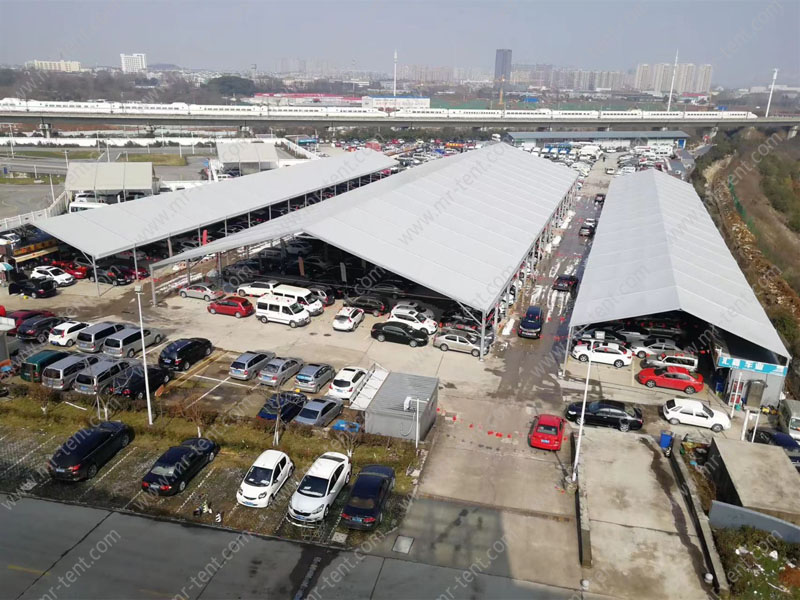
Giant Event Tent
A Giant Event Tent is a temporary building structure designed specifically for various outdoor or semi outdoor activities, providing a flexible, safe, and aesthetically pleasing venue solution. This type of detachable temporary building has undergone significant technological innovation in the past few decades, evolving from a simple tent structure to today's highly specialized and fully functional activity space system.
Modern Giant Event Tents use lightweight and high-strength aluminum alloy frames and high-quality PVC tarpaulins, combined with modular design concepts, to quickly build spaces of different sizes and shapes according to event needs. Compared to traditional fixed buildings, tents have significant cost advantages, saving up to 60-70% of the budget while avoiding long-term land occupation issues.
The core advantages of Giant Event Tents
Flexibility and adaptability are the most prominent features of Giant Event Tents. Standardized module components can be freely combined according to site conditions and activity needs, creating activity spaces ranging from tens of square meters to tens of thousands of square meters. Many professional tent suppliers can provide quick setup services within 24-72 hours to meet emergency activity needs.
In terms of cost-effectiveness, the tent solution avoids expensive permanent construction investments and long-term maintenance costs. According to the scale of the event, the cost of renting or purchasing tents is usually only 30-40% of traditional buildings, and can be reused for 10-15 years. The tent also solves the problem of site limitations and can be quickly deployed in various terrains such as parks, parking lots, and squares without the need for complex foundation engineering.
The continuous improvement of safety performance enables modern tents to withstand various harsh weather conditions. High quality tents can withstand 10-12 level winds, with snow loads up to 50-80kg/m ², and fire resistance up to B1 level flame retardant standards. The professional drainage system ensures no ponding in rainstorm, and the specially designed ventilation system maintains a comfortable internal environment.
Structural Design and Technical Characteristics
The frame system of modern Giant Event Tents mainly uses high-strength aluminum alloy (such as 6082-T6), which has the characteristics of light weight (1/3 lighter than steel), high strength, and corrosion resistance. Modular design allows for spans ranging from 3 meters to 50 meters and a net height of 10-15 meters, achieving column free large spaces.
In terms of covering materials, PVC tarpaulin is the mainstream choice, with a weight between 650-1100g/m ² and a light transmittance ranging from 5% to 15%. It has UV resistance, self-cleaning, and flame retardant properties. New materials such as ETFE film have begun to be applied, with a light transmittance of up to 95% and a service life of over 20 years. The double-layer tarpaulin design can improve insulation performance by 30%.
The integration of auxiliary systems greatly enhances the functionality of tents: LED lighting systems consume 70% less energy than traditional lighting fixtures; The modular flooring system has a load-bearing capacity of 500-1000kg/m ²; The environmental control system can maintain indoor temperature between 18-26 ℃; The sound insulation design reduces external noise by 25-30 decibels.
Main application scenarios
In the field of commercial activities, tents are widely used in exhibitions (accounting for 35% of the total application), product launches, brand promotions, etc. The automotive industry particularly favors tents for new car launches and test drive events, which can save 40% of venue costs. Shopping centers often use tents to create seasonal sales zones, increasing customer traffic by over 30%.
Cultural and entertainment activities account for 25% of tent usage, including music festivals, theatrical performances, film festivals, etc. A professional acoustic tent can accommodate 500-5000 spectators and only takes 2-3 days to build. Sports events also heavily utilize tents as temporary changing rooms, media centers, and audience service areas.
The application of social public areas is increasing day by day, including emergency disaster relief (medical tents can be deployed within 72 hours), vaccination stations, temporary teaching venues, etc. During the epidemic, the tent hospital solution has been applied in many places, and can build 1000 square meters of medical space in a single day.
Precautions for selection and construction
Site assessment is the first step in tent construction, which requires consideration of ground bearing capacity (generally ≥ 1.5kg/cm ²), slope (<5 ° is recommended), underground pipelines, and surrounding environment. Professional companies will provide a complete set of engineering solutions, including wind calculation (designed based on local wind pressure once every 50 years), snow load analysis, and structural verification.
The configuration selection should be determined according to the activity requirements: the recommended height for regular event tents is 4-6 meters, for exhibition purposes it is 6-8 meters, and for large-scale events it is 8-12 meters. The side walls can be fully enclosed, semi transparent, or open, and additional facilities such as VIP rooms, kitchens, bathrooms, etc. should occupy 15-20% of the total area.
The Giant Event Tent industry is growing at a rate of 8-12% per year, and technological advancements and environmental demands will drive this market to reach a scale of 15 billion yuan by 2025. With the acceleration of urbanization and the increasing demand for temporary activities, the importance of tents as a flexible spatial solution will continue to rise.