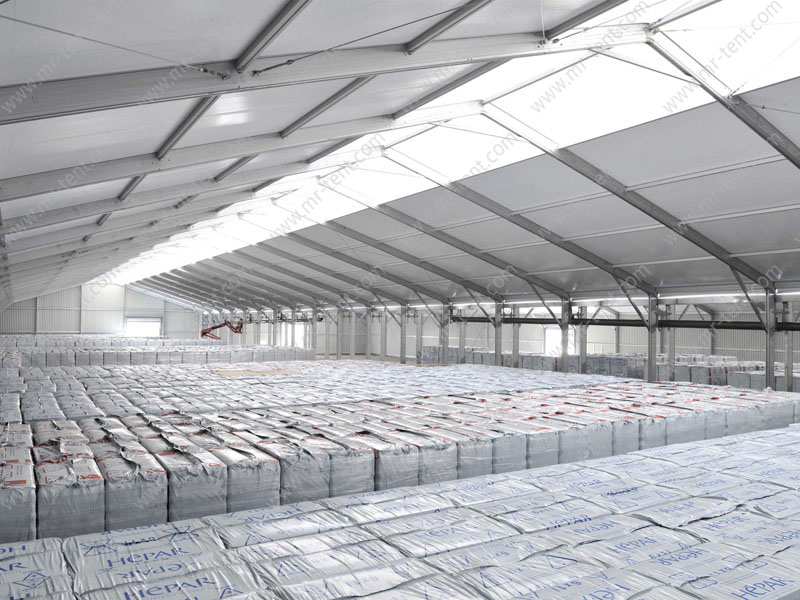
Warehouse Tent
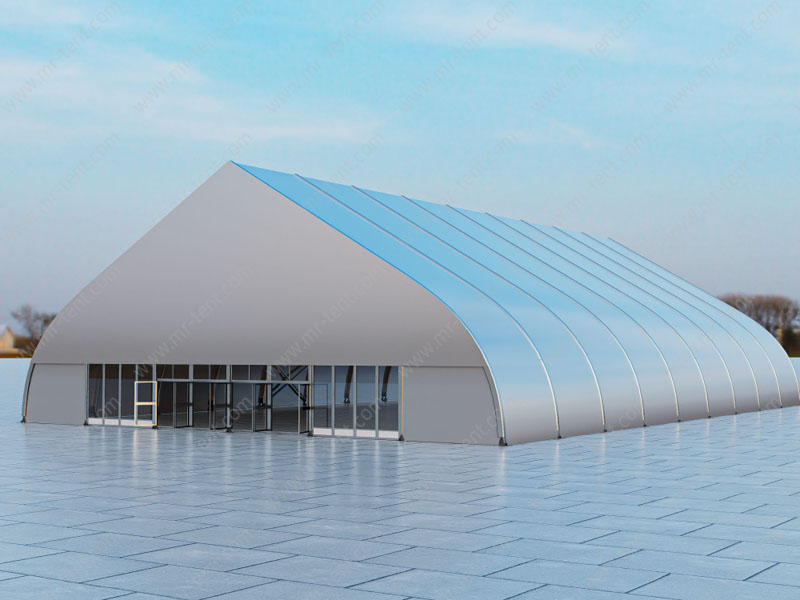
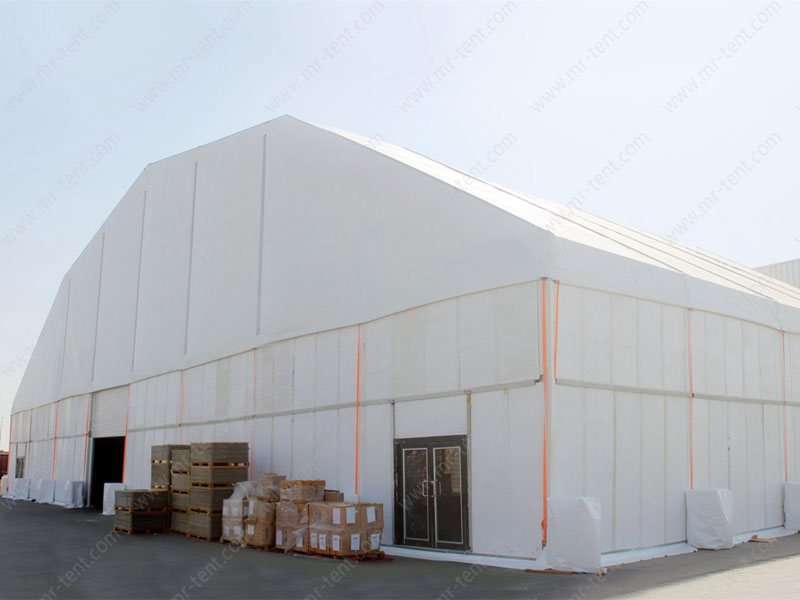
Warehouse tents have emerged as a flexible, practical, and cost-effective storage and operational solution for diverse industrial and commercial scenarios, breaking the limitations of traditional fixed warehouse buildings. Unlike rigid brick-and-mortar warehouses that require long construction cycles and large capital investment, these temporary fabric structures feature rapid installation, adjustable space, and wide adaptability, perfectly catering to short-term storage demands, seasonal business peaks, and expanding operational needs of various enterprises. Crafted with high-strength frame materials and durable waterproof, UV-resistant fabric membranes, modern warehouse tents deliver reliable structural stability and environmental protection performance. They can shield goods and equipment from harsh weather conditions including heavy rain, strong sunlight, wind, and dust, while maintaining excellent ventilation and internal space utilization. Suitable for logistics storage, industrial material stacking, temporary workshop operation, and commercial cargo turnover, warehouse tents have become an indispensable auxiliary facility for modern business operations, balancing functionality, economy, and flexibility to solve diverse space dilemmas for enterprises of all scales.
The core advantage of warehouse tents lies in their unparalleled flexibility in space layout and usage cycle, which distinguishes them from traditional fixed warehouse facilities. Traditional warehouses are fixed in location and size once constructed, making it difficult to adapt to the fluctuating operational demands of enterprises, especially for businesses with seasonal peak periods or uncertain development scales. In contrast, warehouse tents can be freely adjusted in length, width, and height according to actual usage needs, allowing enterprises to expand or shrink storage space at any time without tedious construction procedures. For enterprises facing temporary cargo accumulation, short-term project operation, or transitional production needs, these tents can be quickly set up within a short period to provide usable space, and can also be disassembled and stored when not in use, occupying no permanent land resources. Moreover, the overall structure of the tent is lightweight and portable, enabling integral relocation to adapt to venue changes, such as temporary outdoor storage for construction projects or mobile cargo turnover for logistics enterprises. This flexible space characteristic greatly improves the utilization efficiency of enterprise resources and avoids the waste of fixed asset investment caused by blind warehouse construction.
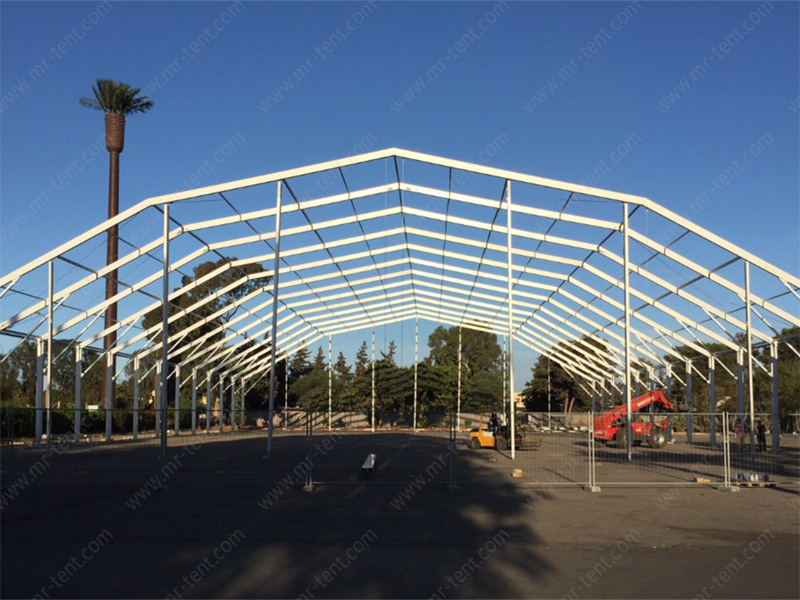
Material quality is the fundamental guarantee for the service performance and durability of warehouse tents, and every component is carefully selected to adapt to complex outdoor and semi-outdoor working environments. The supporting frame of high-quality warehouse tents is usually made of high-hardness alloy materials, which possess excellent compression resistance, bending resistance, and corrosion resistance. This frame structure can maintain stable supporting performance for a long time, not easy to deform or damage under the action of external wind force and heavy pressure, and can adapt to long-term outdoor placement. The surface covering fabric is a special industrial-grade membrane material, which undergoes multiple special treatments to achieve waterproof, rainproof, UV-proof, and anti-aging functions. This fabric can effectively block rainwater penetration and prevent strong ultraviolet radiation from damaging internal goods, while resisting oxidation and embrittlement caused by long-term exposure to wind and sun, ensuring a long service life. In addition, the fabric material has good tear resistance and wear resistance, avoiding damage caused by accidental friction and impact during cargo handling and daily use. All connecting parts of the tent are equipped with reinforced accessories to ensure the tightness and firmness of the overall structure, preventing air leakage and water seepage in harsh weather.
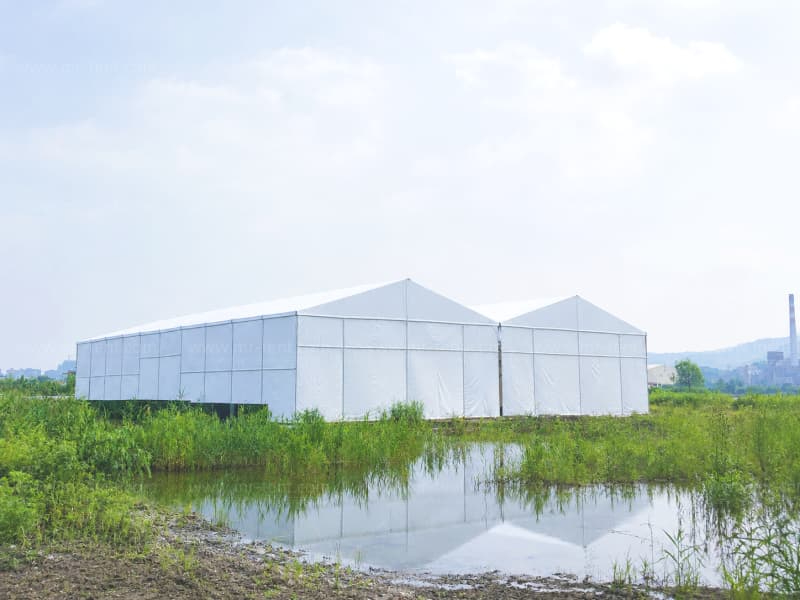
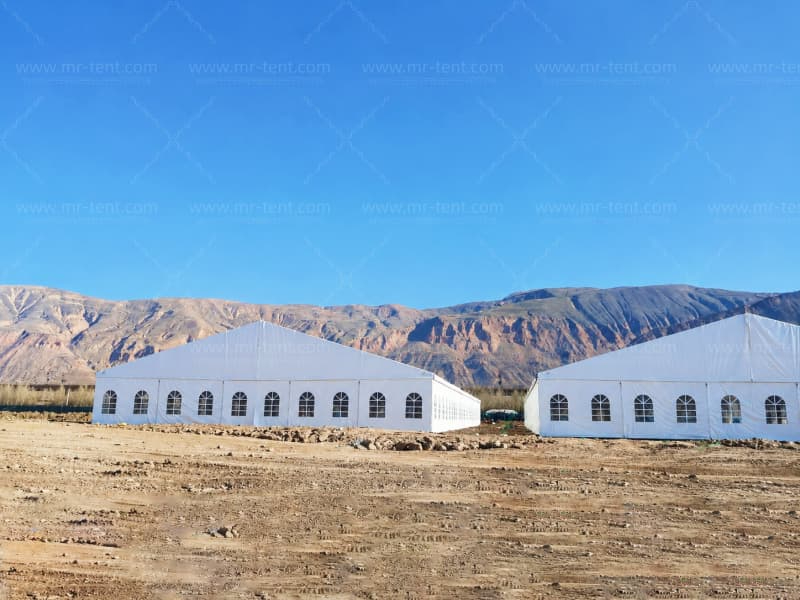
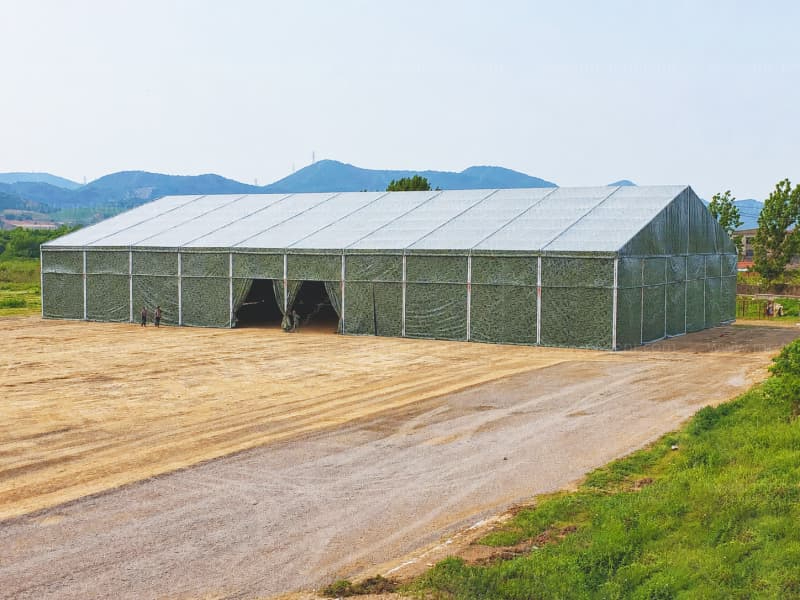
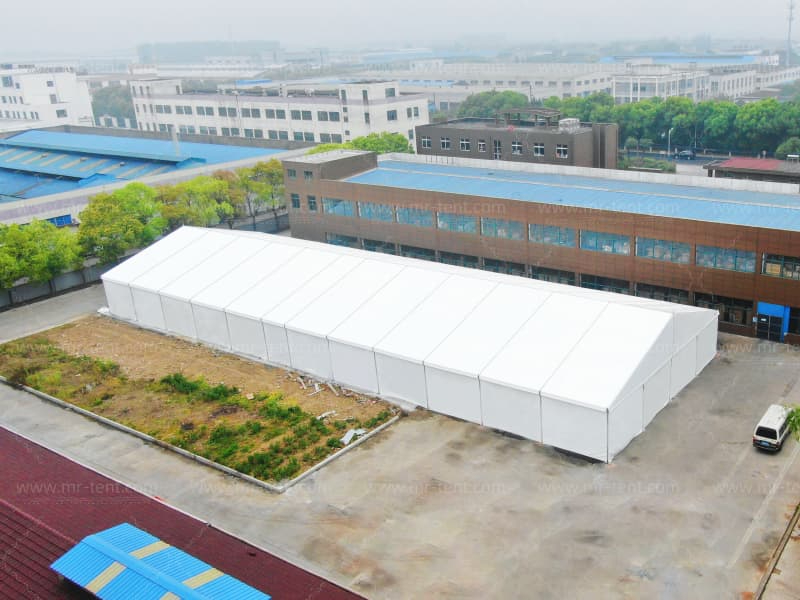
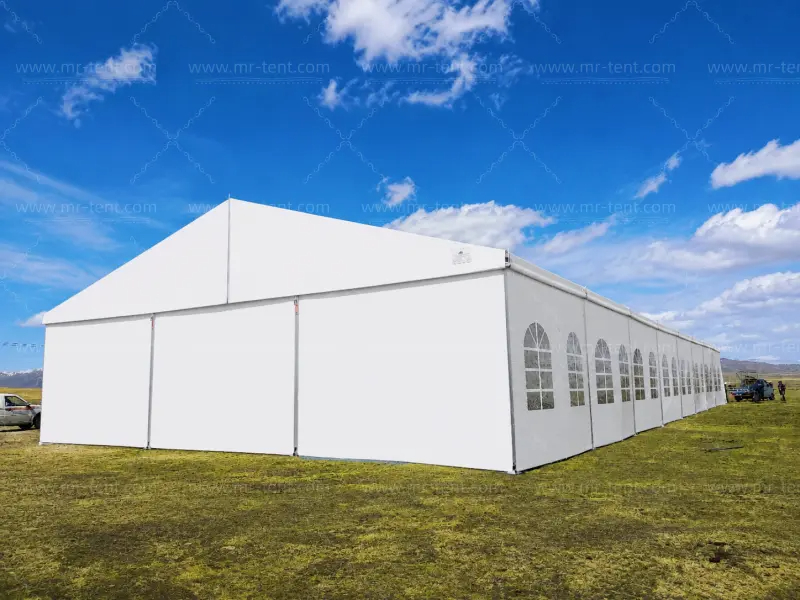
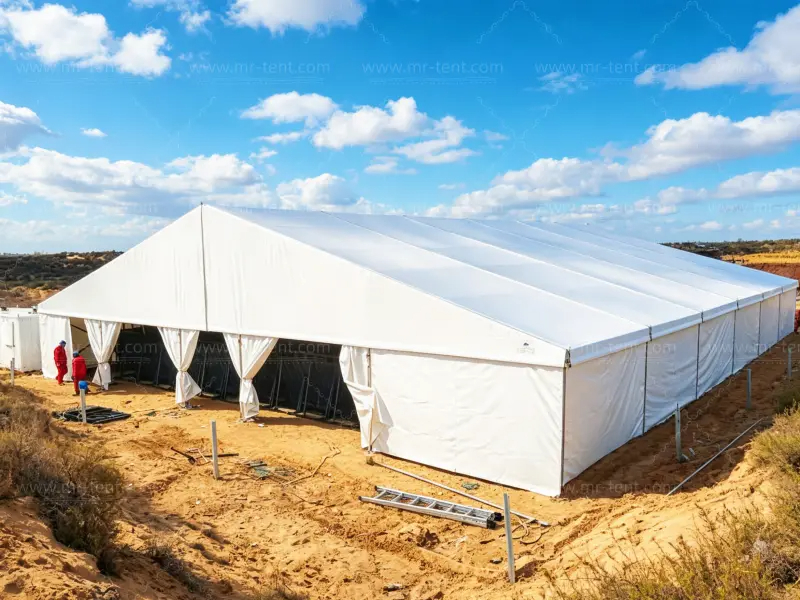
Warehouse tents excel in environmental adaptability and can maintain stable working performance in various complex climatic and site conditions. Whether it is high-temperature and sunny summer, rainy and humid seasons, or windy and cold winter environments, these tents can provide a safe and stable internal storage space. In hot weather, the special membrane fabric can reflect most of the solar heat radiation, reducing the internal temperature rise and avoiding the high temperature and stuffy phenomenon inside the tent, which is conducive to the safe storage of temperature-sensitive goods. In rainy weather, the fully sealed splicing structure and waterproof fabric can completely isolate rainwater, effectively preventing goods from being damp, mildewed, or corroded. For windy weather, the integrated frame structure and fixed accessories can enhance the overall wind resistance, avoiding structural shaking or collapse. In terms of site adaptation, warehouse tents have low requirements for the foundation, and can be built on flat cement ground, gravel ground, lawn, and other different venues without large-scale ground reconstruction and foundation pouring. This feature enables enterprises to make full use of idle outdoor space, greatly expanding the available operational area without being restricted by fixed factory building sites.
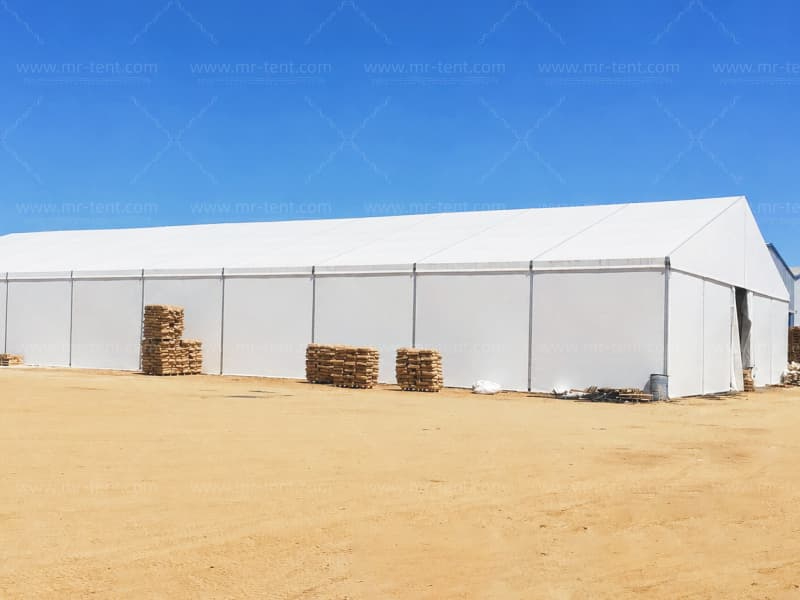
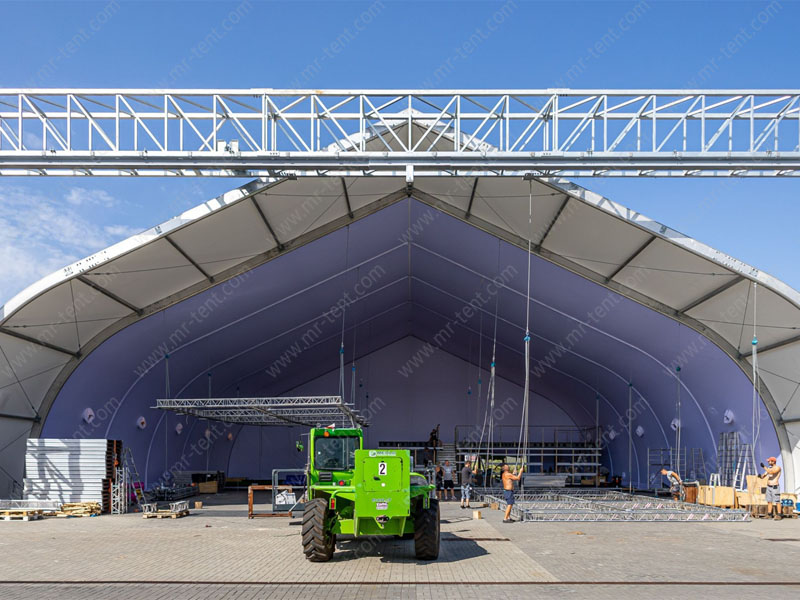
The construction and installation process of warehouse tents is efficient and convenient, which can quickly meet the urgent space needs of enterprises and save a lot of time costs. The entire tent structure adopts a modular assembly design, with standardized and serialized components, which are easy to transport and assemble. Compared with the long construction cycle of traditional warehouses that requires design, foundation construction, wall building, and decoration, the installation of warehouse tents only needs simple assembly of frames, laying of membrane materials, and fixing of accessories. A complete large-scale storage tent can be completed in a very short time, realizing rapid put-into-use. The assembly process does not involve complex construction machinery and a large number of construction personnel, and the operation process is simple and safe, with no construction waste generated, green and environmentally friendly. When the usage demand ends, the disassembly process is equally efficient, and all components can be sorted, stored, and reused, realizing secondary utilization of resources. This efficient construction mode perfectly matches the fast-paced operational needs of modern enterprises, especially for emergency cargo storage, temporary project construction, and peak season capacity expansion scenarios, which can solve space shortages in a timely manner.
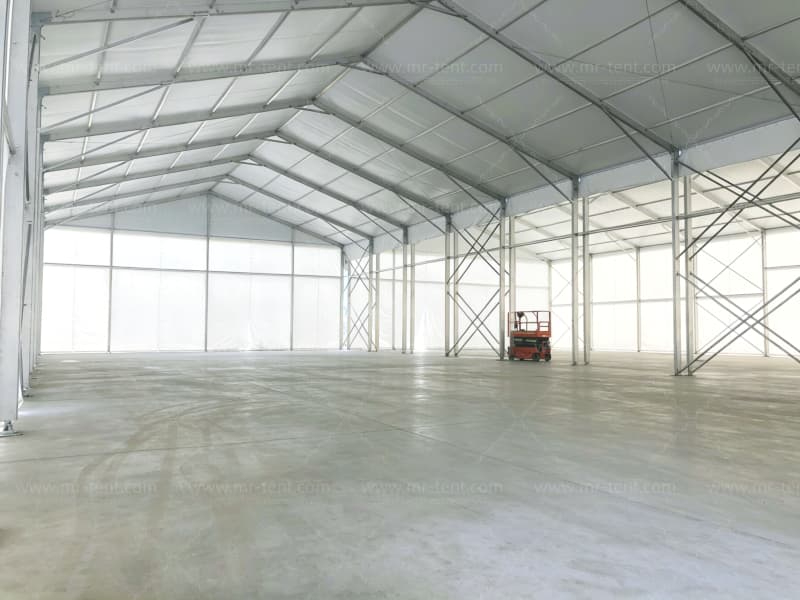
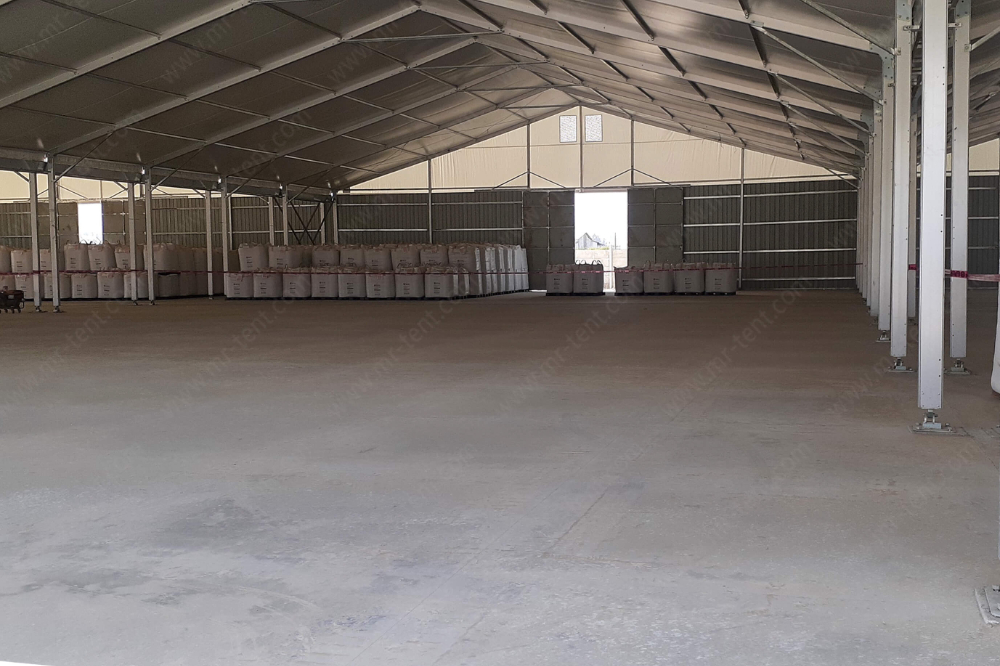
In terms of practical functional design, warehouse tents fully consider the actual storage and operation needs of enterprises, with humanized and diversified structural designs. Most warehouse tents are equipped with flexible door opening designs, including rolling doors, sliding doors, and pedestrian doors, which facilitate the entry and exit of large cargo handling equipment such as forklifts and trolleys, as well as daily personnel access and inspection. The internal space of the tent is flat and pillar-free in most specifications, with a high space utilization rate, which can maximize the placement of goods and equipment without being blocked by supporting columns, convenient for centralized stacking and classified management of cargo. Meanwhile, the tent structure can be matched with auxiliary facilities according to demand, including ventilation windows, lighting systems, heat insulation layers, and dust-proof layers. The ventilation design can effectively improve the internal air circulation, avoid excessive humidity and peculiar smell accumulation inside the tent, and ensure the dryness of the storage environment. The lighting system solves the problem of insufficient light in the internal space, facilitating daily cargo sorting, counting, and handling operations. These personalized functional designs make warehouse tents more in line with the refined operational needs of modern warehousing.
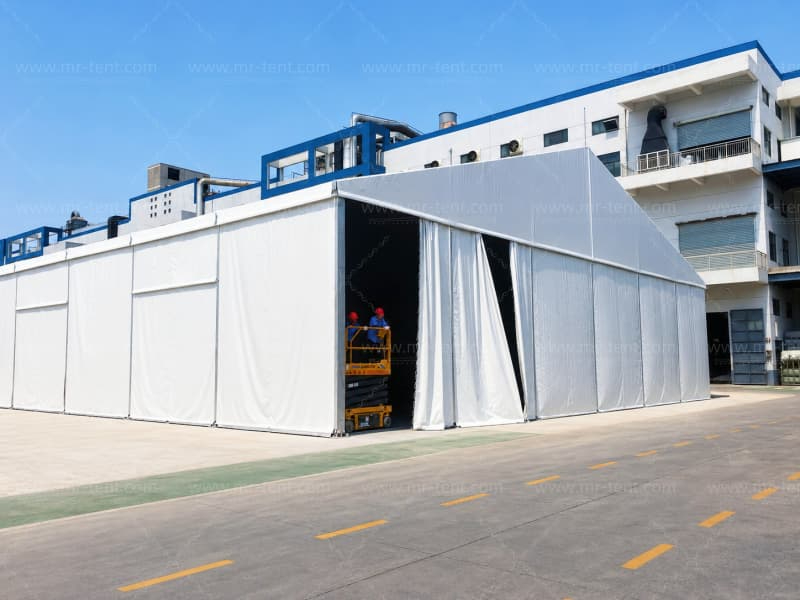
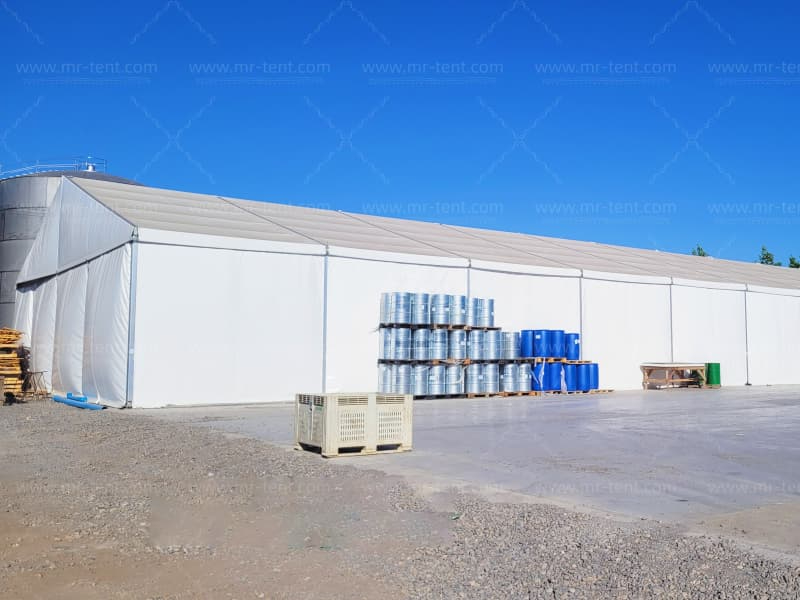
Warehouse tents have a wide range of application scenarios, covering multiple industries and diverse operational links, and can flexibly meet different usage purposes. In the logistics and transportation industry, they are often used as temporary transit warehouses, cargo sorting stations, and loading and unloading canopy areas, providing sheltered operating conditions for cargo turnover and logistics distribution. In the manufacturing industry, enterprises can use them as temporary production workshops, raw material storage areas, and finished product stacking areas to relieve the pressure of insufficient internal factory space during production peak periods. In the construction industry, warehouse tents can store construction materials, mechanical equipment, and engineering supplies, protecting construction resources from weather damage and ensuring the smooth progress of construction projects. In addition, they are also widely used in commercial exhibitions, agricultural product storage, emergency material reserve, and other scenarios. Whether it is long-term fixed auxiliary storage or short-term temporary operational use, warehouse tents can achieve accurate adaptation, becoming a multi-functional space solution for various industries.
The economic advantages of warehouse tents are prominent, helping enterprises effectively control operational costs and improve input-output benefits. Compared with the huge capital investment required for the construction of traditional fixed warehouses, the investment cost of purchasing and using warehouse tents is much lower, avoiding the high expenses of land acquisition, architectural design, foundation construction, and later maintenance of fixed buildings. The reusable performance of warehouse tents further reduces the long-term use cost of enterprises. After completing a single usage scenario, the disassembled tent components can be stored intact and put into reuse in subsequent projects or other venues, realizing repeated cyclic utilization of resources. In addition, the short construction cycle of warehouse tents enables enterprises to quickly put the space into use, shorten the idle period of operational resources, and create economic benefits faster. The low daily maintenance cost of the tent is also an important advantage; the high-quality material has strong anti-damage ability, and daily cleaning and maintenance are simple and convenient, without expensive maintenance and repair costs, effectively reducing the daily operational burden of enterprises.
Safety performance is a key design focus of warehouse tents, and the overall structure and materials are optimized to ensure safe and stable operation. The high-strength frame structure undergoes professional stress design, which can evenly bear external pressure and resist natural factors such as strong wind and accumulated snow, avoiding structural collapse and deformation. The membrane materials used have good flame-retardant and anti-static properties, which can effectively reduce potential safety hazards such as open flame combustion and static electricity accumulation, and improve the overall safety level of the storage space. All connecting parts of the tent are reinforced with special accessories to prevent loosening and falling off caused by long-term vibration and external force impact, ensuring the integrity and firmness of the overall structure. At the same time, the closed structure of the tent can effectively isolate external dust, debris, and small animals, avoiding damage and loss of stored goods. For enterprises storing industrial materials, electronic equipment, and other precision goods, the safe and closed storage environment provided by warehouse tents can well protect the integrity and performance of goods, reducing economic losses caused by environmental factors.
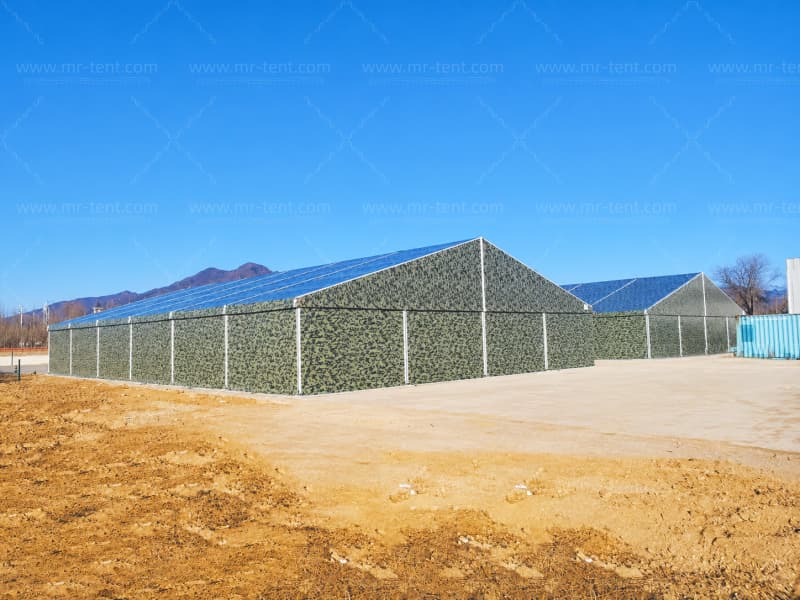
With the continuous upgrading of industrial demand, the design and performance of warehouse tents are also constantly optimized and innovated, adapting to more high-standard usage scenarios. Modern warehouse tents have broken through the single simple storage function of traditional temporary tents, and gradually developed towards diversification, refinement, and high-performance. On the basis of maintaining flexibility and economy, new-type tents optimize the heat insulation, moisture-proof, and wind-resistant performance, and can adapt to higher-standard storage needs of special goods. The appearance design is more neat and standardized, which can be well integrated into enterprise factory areas, logistics parks, and other environments, maintaining a unified and orderly overall layout. In terms of structural optimization, the modular design is more precise, realizing faster assembly and disassembly, and the space scalability is stronger, which can meet the large-scale space expansion needs of enterprises. At the same time, the personalized customization service is increasingly perfect, and enterprises can adjust the size, auxiliary functions, and supporting facilities of the tent according to their exclusive usage needs, realizing one-stop customized space solutions.
The environmental protection characteristics of warehouse tents conform to the current green and low-carbon development concept of the industry, with outstanding ecological and social benefits. Different from traditional warehouse construction that will generate a large amount of construction waste, dust pollution, and noise pollution, the assembly and disassembly process of warehouse tents produces no construction waste, and will not damage the original ground and vegetation environment of the site. All tent components are recyclable and reusable, avoiding the resource waste caused by one-time construction and demolition of fixed buildings. The membrane materials used are environmentally friendly and non-toxic, with no harmful gas volatilization during use, which will not cause pollution to the internal storage environment and the external ecological environment. In addition, the good light transmission and heat insulation performance of the tent can reduce the use of artificial lighting and temperature regulation equipment during daily use, thereby reducing energy consumption and achieving energy-saving and emission-reduction effects. This green and environmentally friendly usage mode makes warehouse tents a sustainable development space solution, which is in line with the long-term development needs of modern enterprises and the industry.
Looking ahead, warehouse tents will have broader application prospects with the continuous development of modern logistics, industrial manufacturing, and flexible business models. As more and more enterprises pursue refined operation and flexible cost control, the advantages of warehouse tents in terms of flexible space, low investment, high efficiency, and environmental protection will be further highlighted. In the future, the product performance of warehouse tents will continue to be upgraded, with more intelligent auxiliary functions added, such as intelligent temperature and humidity monitoring, automatic ventilation adjustment, and remote safety monitoring, further improving the intelligence and refinement of the storage environment. At the same time, the application fields will continue to expand, covering more emerging industries and special scenario needs. From temporary emergency storage to long-term auxiliary operation, from civilian commercial use to industrial professional use, warehouse tents will continue to iterate and upgrade, providing more efficient, economical, and flexible space support for the high-quality development of various industries.