Sports Tent
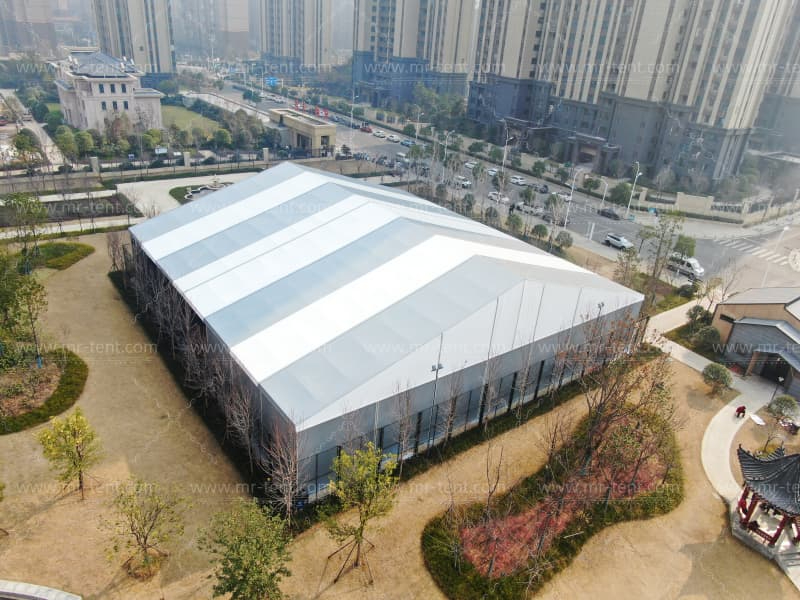
Sports tents have emerged as indispensable flexible spatial solutions for modern sports activities, breaking the limitations of fixed sports venues and enabling diverse athletic events to be carried out stably in various outdoor and semi-outdoor environments. These specially designed shelter structures integrate weather resistance, spatial flexibility and functional practicality, catering to the needs of casual sports training, amateur competitions, public sports events and spectator rest scenarios. Unlike traditional rigid stadium buildings, sports tents feature lightweight structural designs and convenient assembly modes, which can be quickly deployed and disassembled according to activity demands. They effectively shield participants and audiences from intense sunlight, sudden rainfall, wind and fine dust, creating a safe and comfortable sports experience. With strong adaptability to different sites and sports types, they have become a popular auxiliary facility for promoting universal sports and enriching outdoor sports scenarios.
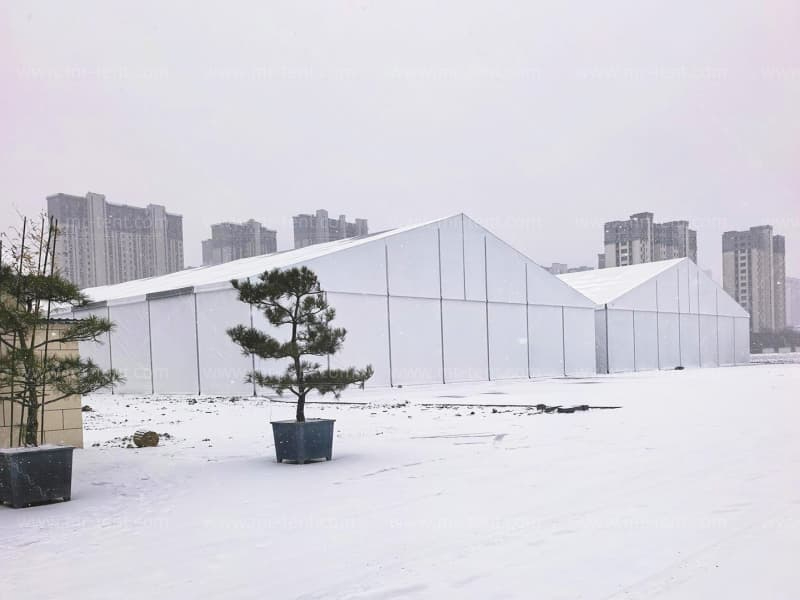
The core value of sports tents lies in their powerful all-weather protection performance, which solves the biggest pain point of outdoor sports affected by unpredictable weather changes. Outdoor sports activities are often forced to pause or terminate due to sudden extreme weather, whether it is scorching summer sunshine, continuous rainy weather, dry windy days or cool frosty mornings. Sports tents adopt high-performance functional fabrics that can effectively block ultraviolet radiation, avoid sunburn and heat fatigue for athletes during long-term training and competitions, and reduce the impact of high temperature on physical performance. The tight fabric splicing and professional edge sealing design can isolate rainwater penetration, keeping the internal ground dry and preventing sports injuries caused by slippery surfaces. Meanwhile, the optimized frame structure can resist ordinary wind interference, maintaining the stability of the overall space. This reliable weather adaptation allows sports activities to proceed as scheduled, greatly improving the stability and fault tolerance rate of outdoor sports arrangements.
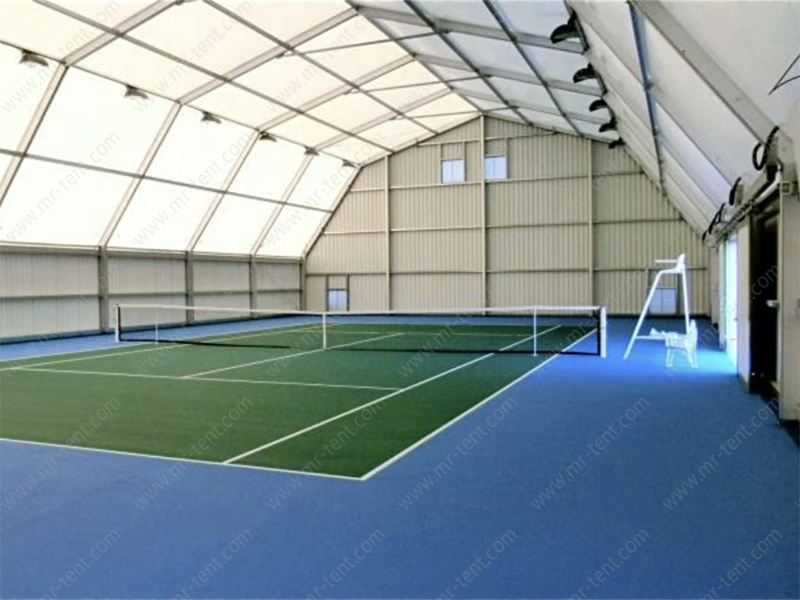
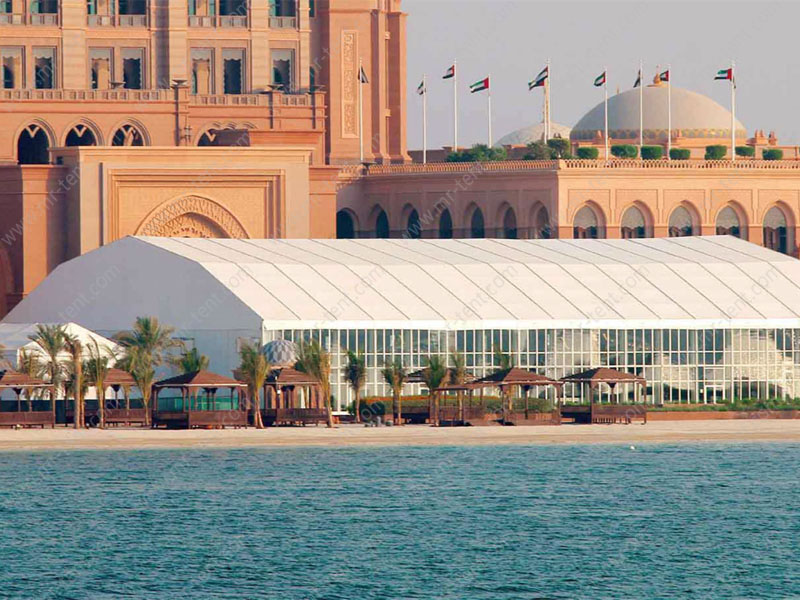
Spatial flexibility and site adaptability are key advantages that make sports tents widely applicable in various sports scenarios. Different from fixed stadiums that occupy permanent land resources and have single spatial functions, sports tents can adapt to flat grounds such as lawns, cement floors, playgrounds and open vacant lots, and can even be arranged on special elevated or terrace sites according to actual needs. The modular assembly design supports flexible adjustment of internal space size, which can meet the layout requirements of small single-person training areas, medium team competition venues and large spectator rest zones. The internal column-free open space design maximizes the utilization rate of the venue, ensuring unobstructed sports sightlines and free movement space for athletes. After the end of sports activities, the tents can be quickly disassembled and stored without causing permanent damage to the site, realizing repeated recycling and flexible switching of sports space, which is very suitable for temporary sports events and regular mobile sports training.
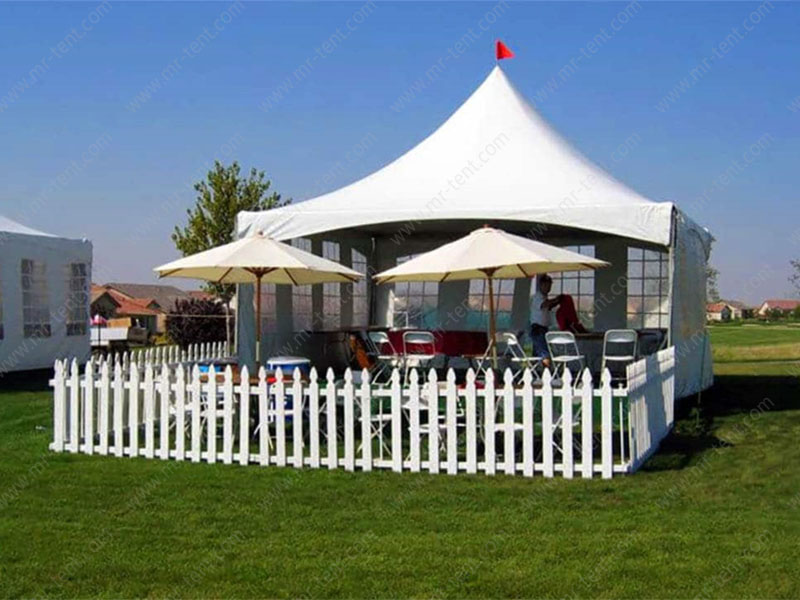
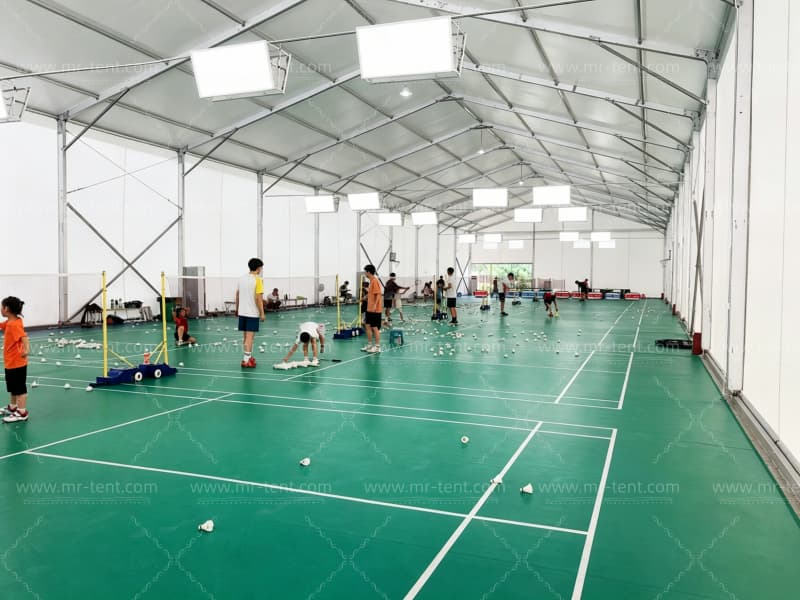
Sports tents cover a rich variety of sports application scenarios, fully meeting the diverse needs of modern mass sports and amateur competitive sports. In ball sports, they can build temporary enclosed venues for basketball, badminton, tennis and volleyball training and small-scale competitions, providing athletes with a relatively independent sports space free from external interference. For outdoor track and field training, fitness running and team expansion sports, sports tents can serve as rest stations, equipment storage areas and temporary command centers, providing convenient logistical support for sports activities. In community sports meetings, school sports festivals and public welfare sports events, they can be used as spectator shelters, athlete waiting areas and award ceremony temporary venues, optimizing the overall activity layout. In addition, they are also suitable for outdoor yoga, bodybuilding training and lightweight leisure sports, creating a quiet and comfortable sports atmosphere for sports enthusiasts.
The structural design of modern sports tents focuses on the integration of stability, durability and humanized experience, laying a solid foundation for long-term safe use. The tent frame is made of high-strength lightweight alloy materials, which has excellent compression resistance and deformation resistance, and can maintain stable structural performance after long-term outdoor use. The frame connection parts adopt precision locking structures, which avoid loose shaking caused by frequent assembly and disassembly, and effectively improve the overall wind resistance and shock resistance of the tent. The outer fabric has good wear resistance and aging resistance, which can resist the erosion of outdoor sunlight, wind and rain, and maintain a neat appearance and stable performance for a long time. At the same time, the design fully considers the internal sports experience, with reasonable ventilation openings reserved around the tent to ensure smooth air circulation inside, avoid stuffy and humid environment, and maintain fresh air during intense sports.
Sports tents play an important role in promoting the popularization of national sports and enriching urban public sports resources. At present, the public sports space in many areas is limited, and fixed stadiums often have problems such as insufficient quantity and inconvenient access, which restricts the daily sports participation of residents. As a flexible supplementary sports facility, sports tents can quickly build standardized sports activity spaces in urban parks, community squares, campus open spaces and suburban activity venues, effectively making up for the shortage of public sports venues. They lower the threshold for residents to participate in outdoor sports, allowing people of all ages to carry out sports training and fitness activities at any time. Whether it is children's sports enlightenment training, young people's daily fitness exercises or middle-aged and elderly people's leisure sports, sports tents can provide suitable space protection, helping to create a strong social sports atmosphere.
In terms of environmental protection and economic benefits, sports tents have obvious advantages over traditional fixed sports buildings. The construction of traditional stadiums requires a large amount of building materials and long construction cycles, which will generate construction waste and cause certain damage to the site environment. In contrast, sports tents adopt prefabricated modular production, with no on-site construction waste generated during assembly, and will not damage the original land vegetation and site structure. All materials of the tent can be recycled and reused, which greatly reduces resource waste and environmental pollution. Economically, the deployment cost of sports tents is far lower than that of fixed buildings, and there is no need for long-term land occupation and high daily maintenance costs. It can realize temporary venue construction for short-term sports events and long-term repeated use for daily sports, with high cost performance and resource utilization efficiency.
The humanized detail design of sports tents further optimizes the sports and viewing experience of users. In terms of light transmission, the tent fabric adopts optimized light transmission technology, which can filter strong glare while ensuring sufficient internal light, avoiding the impact of harsh light on athletes' vision and creating soft and uniform internal light conditions. The bottom of the tent can be matched with auxiliary ground mats according to sports needs, which can effectively buffer the impact of sports movements, reduce the risk of joint and muscle injuries, and improve the comfort of sports. The tent is equipped with adjustable shielding components, which can flexibly adjust the shading and windproof range according to different weather conditions and activity needs. For spectator areas, the open and spacious internal space ensures wide viewing angles, allowing audiences to clearly watch the sports process without visual obstruction, improving the overall viewing experience of sports events.
Sports tents show unique advantages in the organization and operation of various sports events, helping to improve the standardized level of event management. For small and medium-sized amateur competitions, regional sports tournaments and campus sports activities, sports tents can provide independent functional partitions, including athlete preparation areas, referee rest areas, equipment placement areas and medical emergency areas, realizing scientific zoning management of the event site. The closed and semi-closed space form can isolate external noise and pedestrian interference, providing a relatively quiet and concentrated competition environment for athletes. During the event, the tent can store sports equipment, medical supplies and event materials in a centralized manner, facilitating the unified scheduling and management of staff. After the event, the rapid disassembly and storage feature can shorten the site recovery cycle, improve the efficiency of event site turnover, and bring great convenience to event organizers.
With the continuous upgrading of public sports demand, the functional design of sports tents is also constantly optimized and innovated to adapt to more diversified sports scenarios. Modern sports tents are no longer limited to basic weather shelter functions, but gradually develop towards multi-functional and intelligent adaptation. Some optimized tent designs reserve installation spaces for auxiliary sports equipment, which can be matched with lighting systems, sound equipment and temporary isolation facilities to meet the needs of night sports activities and standardized competition layout. The improved ventilation and temperature control auxiliary structures can effectively adjust the internal temperature and humidity, ensuring a comfortable sports environment in high-temperature summer and low-temperature spring and autumn. In addition, the personalized space layout design can adapt to the spatial requirements of different sports items, from dynamic competitive ball games to static leisure fitness, realizing the multi-scene and multi-purpose use of a single sports tent.
Sports tents also play a positive role in sports education and youth sports training, providing reliable venue support for campus sports development and youth physical training. Many schools and sports training institutions are faced with the problem of insufficient indoor sports venues, and outdoor sports teaching and training are easily restricted by weather conditions, affecting the continuity of sports teaching. The rapid deployment feature of sports tents can quickly build temporary sports teaching venues on campus, ensuring that physical education classes, after-school sports training and youth sports competitions are carried out normally in rainy or hot weather. The safe and open sports space is very suitable for children and teenagers to carry out physical exercise, team sports training and sports quality expansion, helping students develop good sports habits and improve physical fitness. At the same time, the flexible venue form can enrich the forms of campus sports activities and promote the diversified development of school sports education.
Looking at the development trend of modern sports, sports tents will become an increasingly important part of the sports facility system, driving the continuous popularization and innovation of outdoor sports. With people's increasing emphasis on physical health and the continuous expansion of outdoor sports demand, the demand for flexible, efficient and low-cost sports venues will continue to rise. Sports tents perfectly fit the development concept of universal sports and green sports, relying on their advantages of flexible deployment, environmental protection and durability, multi-functional adaptation and low energy consumption. In the future, with the continuous innovation of material technology and structural design, sports tents will achieve further breakthroughs in weather resistance, space utilization and intelligent adaptation, and can be applied to more professional sports scenarios and public sports fields. It will continuously activate urban and rural public sports space, meet the personalized and diversified sports needs of different groups, and inject lasting vitality into the development of mass sports.