Warehouse Tent vs Steel Warehouse: Which Is Better for Industrial Storage in 2026?
May 30, 2026
Warehouse Tent vs Steel Warehouse: Which Is Better for Industrial Storage in 2026?
Key Takeaways
Warehouse tents can be installed in weeks rather than months.
Aluminum warehouse tents usually require a lower initial investment than permanent steel buildings.
Warehouse tents are modular and can be expanded, relocated, or dismantled when business needs change.
Steel warehouses provide a permanent solution with a longer design life.
For temporary, seasonal, or rapidly growing storage needs, warehouse tents often offer a faster and more cost-effective option.
Introduction
When companies need additional storage space, one of the first questions they face is whether to invest in a warehouse tent or a traditional steel warehouse.
Both solutions can provide large-scale storage capacity, but they differ significantly in construction time, investment cost, flexibility, and long-term usage.
This guide compares warehouse tents and steel warehouses to help businesses choose the most suitable solution for their operational requirements.
What Is a Warehouse Tent?
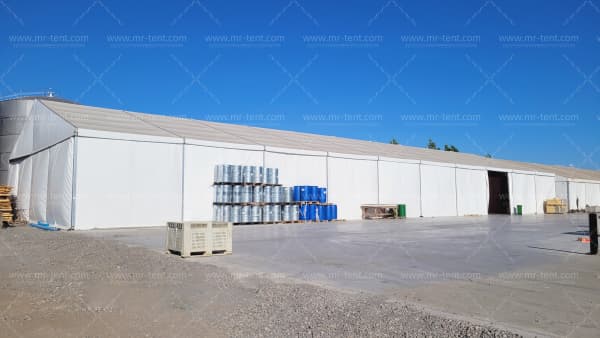
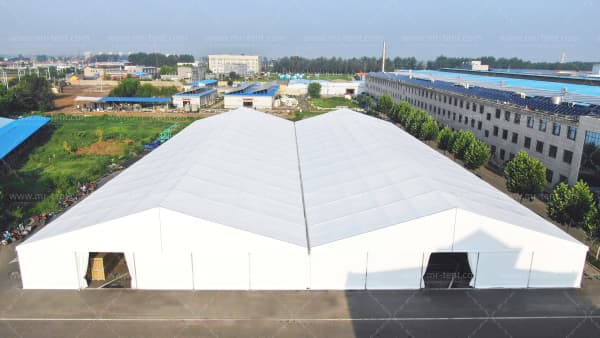
A warehouse tent is a clear-span structure consisting of an aluminum frame and a PVC fabric cover. Unlike conventional buildings, warehouse tents do not require permanent foundations and can be installed on concrete, asphalt, compacted soil, or other surfaces.Typical applications include:
Industrial storage
Logistics centers
Port storage
Construction site warehouses
Agricultural storage
Manufacturing workshops
Temporary production facilities
Modern warehouse tents can be equipped with:
Sandwich panel walls
Steel walls
ABS walls
Glass doors
Roller shutter doors
Ventilation systems
Lighting systems
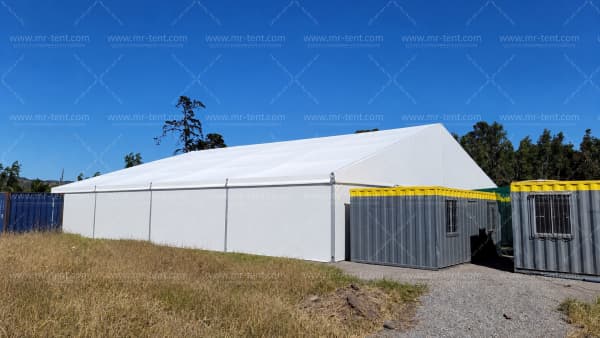
Warehouse Tent vs Steel Warehouse: Comparison Table
| Factor | Warehouse Tent | Steel Warehouse |
|---|---|---|
| Construction Time | 1–4 weeks | 3–12 months |
| Initial Investment | Lower | Higher |
| Flexibility | Excellent | Limited |
| Relocation | Possible | Not possible |
| Expansion | Easy | Complex |
| Permit Requirements | Often simpler | Usually more complex |
| Lifespan | 15–30+ years | 30–50+ years |
| Foundation Requirements | Minimal | Significant |
| Installation Disruption | Low | High |
1.Construction Speed
For many businesses, speed is critical.
A traditional steel warehouse may require:
Design approval
Site preparation
Foundation work
Steel fabrication
Construction
The entire process can take several months.
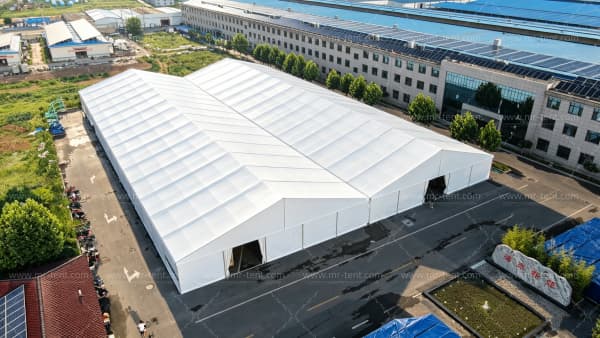
In contrast, a warehouse tent uses prefabricated aluminum components that are manufactured in advance and assembled on site.
For companies facing urgent storage shortages, this can be a decisive advantage.
Winner: Warehouse Tent
2. Initial Investment
Cost is one of the biggest factors in warehouse planning.
A warehouse tent generally requires:
Aluminum frame
PVC roof cover
Optional wall system
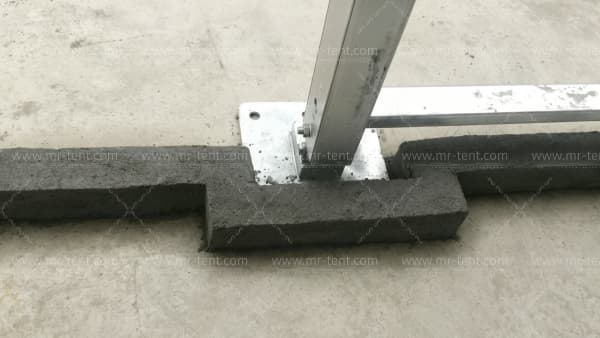
Basic anchoring
A steel warehouse requires:
Extensive foundations
Structural steel
Roofing system
Construction labor
As a result, warehouse tents often offer a lower upfront investment, especially for large storage areas.
Winner: Warehouse Tent
3. Flexibility and Expansion
Business requirements change.
A logistics company may need:
2,000 sqm today
5,000 sqm next year
Warehouse tents are modular structures.
Additional bays can be added to extend the building length without replacing the existing structure.
Steel warehouses are far more difficult and expensive to modify once completed.
Winner: Warehouse Tent
4. Durability and Lifespan
Modern warehouse tents are designed for long-term use.
A high-quality aluminum frame is corrosion-resistant and can last for decades.
PVC fabric covers typically provide many years of service and can be replaced independently if required.
Steel warehouses generally offer a longer overall design life but require maintenance to prevent corrosion and deterioration.
Winner: Steel Warehouse
5. Weather Resistance
Professional warehouse tents are engineered to withstand challenging environmental conditions.
Typical specifications include:
Wind resistance up to 100 km/h
Waterproof PVC roof cover
Fire-retardant fabric
Optional snow-load designs
For extreme climates, customized structural calculations can be provided.
Both solutions can perform well when properly engineered.
Winner: Tie
Common Industries Using Warehouse Tents
Warehouse tents are widely used in:
Logistics and Distribution
Rapid expansion of storage capacity during peak seasons.
Manufacturing
Temporary workshops and production areas.
Ports and Harbors
Bulk cargo storage and equipment protection.
Construction
Material storage close to project sites.
Agriculture
Storage for machinery, fertilizers, and harvested products.
How to Choose the Right Warehouse Tent?
When evaluating a warehouse tent, consider the following factors:
Width
Common widths range from 10m to 50m.
Side Height
Higher sidewalls provide greater storage volume and forklift clearance.
Door Type
Options include:
Sliding doors
Roller shutter doors
Double swing doors
Wall System
Available options include:
PVC sidewalls
ABS walls
Steel walls
Sandwich panel walls
Future Expansion
Choose a modular design that can grow with your business.
Frequently Asked Questions
+How long does a warehouse tent last?
-A high-quality aluminum warehouse tent can provide more than 20 years of service with proper maintenance.
+Can warehouse tents be used year-round?
-Yes. They can be equipped with insulated wall systems, ventilation, and climate-control equipment for year-round operation.
+Are warehouse tents waterproof?
-Yes. Professional PVC fabric covers are fully waterproof and designed for industrial applications.
+Can warehouse tents be customized?
-Yes. Width, length, side height, wall systems, doors, and accessories can all be customized.
+Are warehouse tents suitable for ports and logistics centers?
-Absolutely. Many logistics companies and port operators use warehouse tents because they can be installed quickly and expanded as storage requirements increase.
Conclusion
Choosing between a warehouse tent and a steel warehouse depends on your priorities.
If your project requires rapid deployment, lower initial investment, and future flexibility, a warehouse tent is often the better solution.
If you require a permanent building with a very long design life and do not anticipate relocation or expansion, a steel warehouse may be the preferred option.
For many logistics companies, manufacturers, ports, and construction firms, modern aluminum warehouse tents provide the ideal balance of cost, speed, and operational flexibility.