Basketball Tent
Basketball tents have emerged as a practical and versatile modern sports facility, effectively solving the core limitations of traditional outdoor basketball courts and fixed indoor stadiums. Designed specifically for basketball sports scenarios, these modular shelter structures deliver all-weather usability, flexible layout, and convenient assembly, filling the gap in medium and short-term sports venue supply. Unlike rigid concrete stadiums or fully exposed outdoor courts, basketball tents integrate durable structural frames and weather-resistant cover materials to create a semi-enclosed sports space. They shield players from harsh sunlight, sudden rainfall, wind, and light snow, ensuring uninterrupted training, daily recreation, and casual competitions. Lightweight yet sturdy, they adapt to diverse site conditions without complex construction, making them ideal for schools, communities, sports clubs, and public recreational spaces seeking accessible, reliable basketball venues.
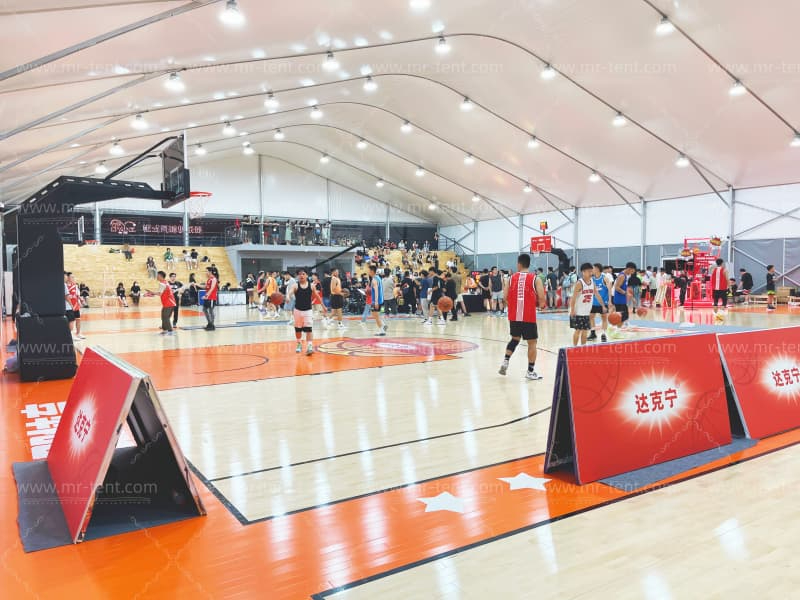
The structural design of modern basketball tents is engineered to prioritize sports functionality, spatial comfort, and long-term stability, forming a scientific and practical overall framework. The core supporting structure adopts high-strength lightweight alloy materials, which boast excellent toughness and compression resistance while avoiding excessive weight. This structural configuration eliminates the need for intermediate supporting columns inside the tent, creating a fully clear-span internal space that completely fits the spatial dimensions of standard basketball courts. Every corner of the interior can be fully utilized, leaving sufficient moving space for players to dribble, sprint, jump, and complete tactical cooperation without visual obstruction or movement restrictions. The connection parts of the frame are precisely processed with reinforced locking structures, which enhance overall structural stability and effectively resist external wind pressure and subtle ground vibrations during intense sports activities. The overall frame is also treated with anti-rust and anti-corrosion craftsmanship, which delays material aging and ensures stable structural performance after long-term outdoor placement and repeated use in different environments.
The outer covering material of basketball tents is the key to realizing all-weather sports protection, with multiple professional performance attributes tailored for outdoor sports scenarios. The mainstream covering fabrics are thickened and specially treated, integrating waterproof, ultraviolet-proof, dust-proof and anti-tearing functions in one. The dense surface coating can completely block rainwater penetration, preventing the internal court from accumulating water and avoiding slippery ground that affects sports safety. Meanwhile, the UV-resistant layer can isolate most harmful ultraviolet rays in strong sunlight, protecting players’ skin from sunburn and preventing the basketball court surface, sports equipment from aging and fading due to long-term sun exposure. In addition, the material has good tensile strength and toughness, which can resist accidental scratches from basketballs, sports equipment and human contact during high-intensity sports. It also maintains stable performance in low-temperature environments, not easy to harden or crack in cold weather, and can adapt to seasonal changes throughout the year to provide continuous protection for sports activities.
All-weather adaptability is one of the most prominent advantages of basketball tents, fundamentally breaking the seasonal and weather restrictions of traditional outdoor basketball venues. In hot summer, the tent’s shaded space can effectively reduce the internal temperature, avoid direct sunlight exposure, and create a cool and comfortable sports environment, allowing players to carry out long-term training and exercise without suffering from heat stuffiness or sun exposure. In rainy and snowy weather, the fully enclosed or semi-enclosed shelter structure can block rain and snow, keep the internal court dry and tidy, and ensure normal progress of sports activities that would otherwise be forced to stop. In windy weather, the stable frame and tight covering structure can weaken the impact of cross wind, avoid the interference of strong wind on basketball trajectory and players’ balance, and improve the stability and safety of sports. Even in transitional seasons with changeable weather, basketball tents can maintain a stable internal sports environment, realizing 24-hour available sports space and greatly improving the utilization rate of basketball venues.
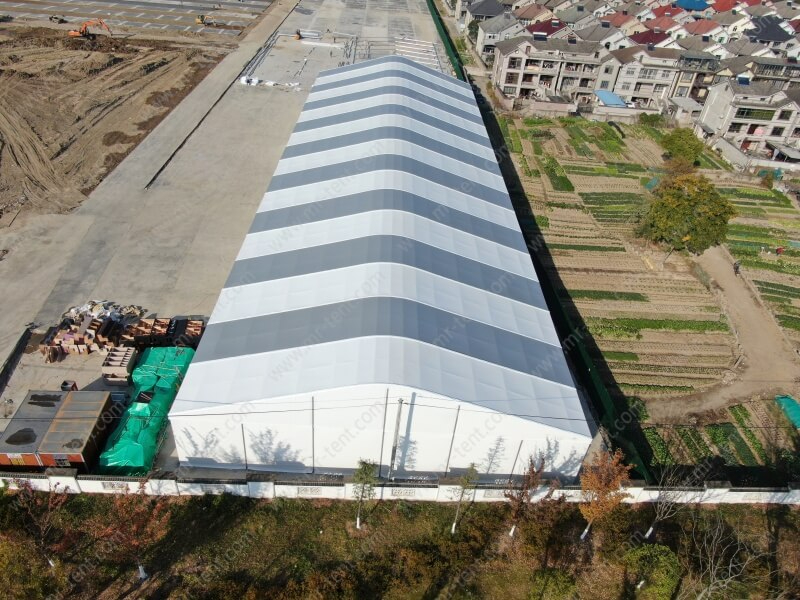
Basketball tents feature highly flexible modular assembly and disassembly, bringing great convenience for venue layout adjustment and scenario switching. The whole tent adopts a spliced modular design, with standardized and unified specifications for all frame components and covering parts, which can be quickly assembled and disassembled according to actual site size and usage demand. The assembly process does not require complex professional construction equipment or tedious foundation engineering, nor does it need to damage the original ground environment of the site. A small team can complete the overall erection work in a short time, and the disassembly process is equally simple and efficient. After disassembly, the components occupy a small storage space and are convenient for centralized storage and long-distance transportation. This flexible characteristic enables the tents to adapt to temporary sports events, short-term training camps, seasonal sports activities and other scenarios. When venue demand changes, the tent scale can be expanded or reduced by increasing or reducing modular components, realizing flexible adjustment of sports space and meeting diversified usage needs.
In terms of internal space optimization, basketball tents fully consider the professional needs of basketball sports and human sports ergonomics. The internal vertical height is scientifically reserved to meet the jumping and shooting needs of players of different heights, eliminating the risk of head collision with the top structure during intense movements such as layups and rebounds. The column-free internal design ensures unobstructed sight lines in the whole venue, which is not only conducive to players’ tactical judgment and on-the-spot cooperation, but also provides a clear viewing field for on-site coaches, staff and spectators. The internal space can be freely planned and divided according to demand, reserving independent areas for warm-up, rest and equipment placement while meeting the standard basketball court layout. In addition, the tent can be matched with auxiliary ventilation and light transmission facilities according to the use environment. The reasonable ventilation design accelerates air circulation inside the tent, avoids air turbidity and stuffiness caused by dense sports crowds, and always maintains a fresh and comfortable internal sports atmosphere.
Basketball tents have wide application scenarios, covering public sports, educational training and commercial sports service fields, and can meet the diversified venue demands of different groups. For educational institutions such as primary and secondary schools and universities, they can make up for the shortage of indoor sports venues, ensure the normal development of physical education courses, after-school sports training and campus basketball leagues, and provide students with stable and safe sports spaces. For community public sports supporting facilities, they provide residents with convenient all-weather basketball exercise venues, enrich community leisure and sports forms, and activate community sports atmosphere. For professional sports training camps and private sports clubs, they can be used as professional training venues and temporary competition venues, supporting daily skill training, tactical drills and small-scale basketball events. Meanwhile, they can also serve as temporary sports supporting facilities for large-scale public sports activities, providing flexible venue supplement for event organization.
Compared with traditional fixed basketball stadiums, basketball tents have outstanding comprehensive advantages in construction cycle, resource consumption and space flexibility. The construction of traditional indoor stadiums involves complex foundation construction, structural pouring and interior decoration, which requires a long construction cycle and high resource and energy consumption. In contrast, basketball tents rely on prefabricated modular components, with extremely short on-site construction time and no large-scale construction waste generated during the whole process, which is more environmentally friendly and efficient. In terms of space utilization, fixed stadiums have single functions and fixed space, which are difficult to adjust after completion, while basketball tents can be disassembled, transferred and reassembled at any time, realizing repeated utilization of resources. They avoid the idle waste of fixed venue resources caused by seasonal demand changes, and can flexibly switch between different use scenarios, greatly improving the flexibility and economy of sports venue operation.
The safety performance of basketball tents is fully guaranteed through standardized structural design and material selection, adapting to the high-intensity characteristics of basketball sports. The overall frame structure undergoes professional stress testing and structural optimization, which can evenly disperse external pressure and internal sports vibration force, maintaining structural stability during long-term use. All connecting parts are equipped with anti-loosening devices to prevent component displacement or loosening caused by frequent sports vibration, eliminating potential safety hazards. The tent covering material has good flame retardant and anti-tearing performance, which can effectively avoid safety accidents caused by material damage. The internal edges and corners of the frame are polished smoothly with anti-collision treatment, which can reduce the risk of collision injury during players’ intense exercise. In addition, the bottom of the tent is designed with stable fixing structures, which can firmly fix the tent on different ground surfaces, prevent displacement or shaking in windy environments or during strenuous sports, and fully protect the personal safety of sports participants.
Daily maintenance and upkeep of basketball tents is simple and convenient, with low long-term operation cost and stable durable performance. The surface of the tent covering material has a smooth anti-fouling coating, which can effectively resist the adhesion of dust, fallen leaves and stains. Daily cleaning only needs simple water flushing and wiping to keep the surface clean and tidy without tedious maintenance work. The alloy frame has stable physical properties, not easy to rust, deform or age, and only needs regular simple inspection of connecting parts to ensure structural firmness. In rainy and snowy seasons, timely removal of accumulated water and snow on the top can avoid excessive pressure on the tent structure and prolong the service life of the equipment. Compared with fixed stadiums that require regular professional maintenance, equipment debugging and space renovation, basketball tents greatly reduce the time cost and economic cost of later operation, and can maintain good use state for a long time with simple daily care, which is very suitable for long-term popular sports use.
With the continuous development of public sports undertakings, basketball tents have become an important supplement to urban and rural sports venue systems, promoting the popularization of mass basketball sports. Traditional sports venue resources are often concentrated in fixed stadiums, with limited coverage and insufficient supply, making it difficult to meet the growing daily sports demand of the public. The emergence of basketball tents breaks the limitations of venue construction, enabling high-quality basketball sports spaces to sink into communities, campuses and rural public sports areas. They allow basketball lovers of all ages to carry out sports activities at any time, effectively stimulating public sports enthusiasm and enriching residents’ daily leisure sports life. As a low-threshold, high-efficiency and multi-scenario sports facility, basketball tents not only optimize the allocation of public sports resources, but also lay a solid foundation for the universal development of national fitness and basketball mass sports.
Looking ahead, basketball tents will continue to iterate and upgrade in design, function and applicability to adapt to the increasingly diverse sports market demand. With the progress of material technology, new high-performance, lighter and more durable environmental protection materials will be applied to tent manufacturing, further improving weather resistance, safety and environmental protection performance. In terms of functional design, more humanized auxiliary configurations will be integrated, including intelligent ventilation and temperature adjustment systems, silent lighting equipment and standardized sports supporting facilities, to create a more professional and comfortable sports environment. Meanwhile, the modular design will be further optimized to realize faster assembly and more flexible space combination, and expand applicable scenarios to more sports and public activity fields. Continuously optimized and upgraded basketball tents will play a greater value in popular sports, campus sports and public sports events, and become an indispensable flexible sports facility in modern urban and rural public sports systems.