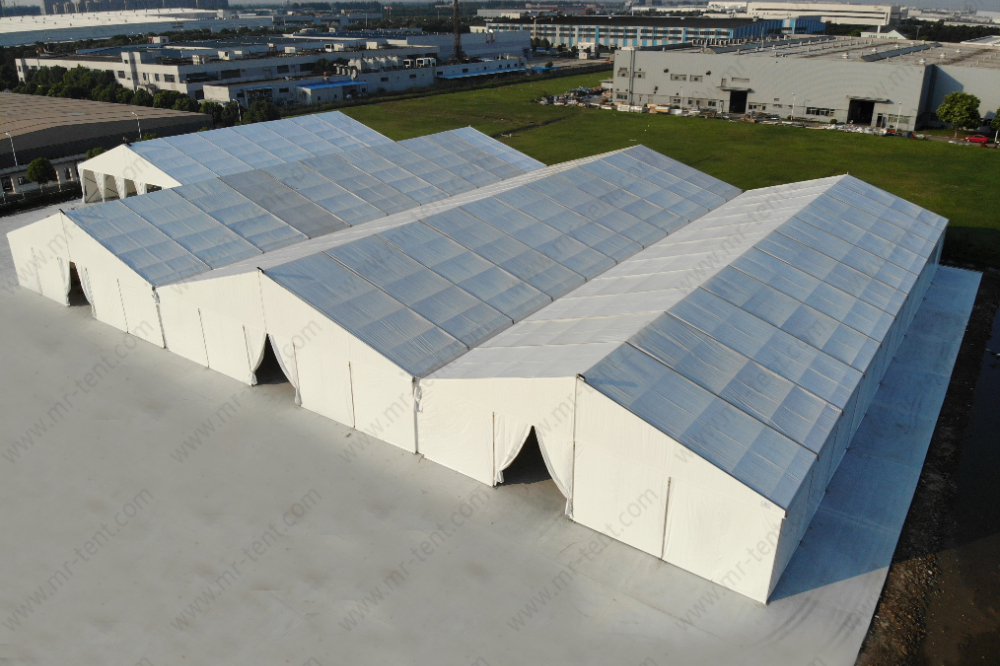
Industrial Storage Tent
In the dynamic landscape of modern industry, the demand for flexible, efficient, and cost-effective storage solutions has never been more pronounced. From manufacturing facilities and construction sites to agricultural operations and logistics hubs, businesses across sectors are constantly seeking ways to optimize their storage space without compromising on durability or accessibility. Amidst this quest, industrial storage tents have emerged as a practical and versatile alternative to traditional brick-and-mortar warehouses and permanent storage structures. These temporary yet robust structures offer a range of benefits that align with the evolving needs of contemporary businesses, making them an increasingly popular choice in various industrial settings.
Industrial storage tents, also known as industrial fabric structures, are engineered to provide large-scale, covered storage space using a combination of a rigid frame and a durable fabric cover. Unlike conventional storage buildings, which require extensive construction time and significant capital investment, these tents are designed for quick assembly, disassembly, and relocation. The core structure typically consists of a frame made from high-strength materials such as galvanized steel or aluminum, which provides structural stability and resistance to environmental factors. The fabric cover, often crafted from polyethylene, PVC, or polyester, is selected for its durability, waterproof properties, and ability to withstand harsh weather conditions, including strong winds, heavy rain, and extreme temperatures. This combination of materials ensures that industrial storage tents can offer reliable protection for a wide range of goods and equipment, from raw materials and finished products to machinery and vehicles.
One of the most notable advantages of industrial storage tents is their exceptional flexibility. Unlike permanent storage facilities, which are fixed in location and size, these tents can be customized to meet specific storage requirements. Businesses can choose from a variety of sizes, ranging from small, compact structures to large-scale tents spanning hundreds of square meters. This scalability makes them ideal for businesses with fluctuating storage needs, such as those experiencing seasonal peaks in production or temporary projects that require additional storage space. For example, agricultural businesses can use industrial storage tents to store crops during harvest season, while construction companies can utilize them to house building materials and equipment at temporary job sites. Moreover, the modular design of many industrial storage tents allows for easy expansion or modification, enabling businesses to adapt their storage space as their operations grow or change.
Cost-effectiveness is another key factor driving the adoption of industrial storage tents. Constructing a permanent warehouse involves substantial costs, including land acquisition, material costs, labor expenses, and permits. In contrast, industrial storage tents require a fraction of the investment, making them an affordable option for small and medium-sized enterprises (SMEs) as well as large corporations looking to optimize their budget. The quick assembly process also reduces labor costs and minimizes downtime, allowing businesses to start using the storage space in a matter of days or weeks rather than months. Additionally, the low maintenance requirements of industrial storage tents contribute to long-term cost savings. The durable fabric covers are resistant to mold, mildew, and UV radiation, and the galvanized steel frames are protected against corrosion, reducing the need for frequent repairs or replacements.
The versatility of industrial storage tents is further highlighted by their wide range of applications across different industries. In the manufacturing sector, these tents are used to store raw materials, work-in-progress inventory, and finished goods. They can also be converted into temporary production facilities or assembly areas during plant expansions or renovations. Construction companies rely on industrial storage tents to protect building materials such as lumber, steel, and concrete from the elements, ensuring that they remain in good condition throughout the construction process. These tents also serve as on-site offices, break rooms, or equipment storage areas, enhancing the efficiency of construction operations.
In the agricultural industry, industrial storage tents play a crucial role in crop storage and livestock housing. Farmers use them to store grains, hay, and other agricultural products, protecting them from moisture, pests, and extreme temperatures. The breathable fabric options available for some industrial storage tents also help to maintain proper ventilation, preventing the buildup of humidity and ensuring the quality of stored crops. Additionally, these tents can be used as temporary shelters for livestock during seasonal changes or when permanent barns are being repaired or expanded.
Logistics and distribution centers also benefit significantly from the use of industrial storage tents. With the growth of e-commerce and the increasing demand for fast and efficient order fulfillment, logistics companies need flexible storage solutions to handle fluctuating inventory levels. Industrial storage tents can be quickly set up to provide additional storage space for packages, pallets, and shipping containers, helping to streamline operations during peak periods such as holiday seasons. They can also be used as temporary loading and unloading areas, protecting goods from the elements while they are being transferred between trucks and warehouses.
Another important application of industrial storage tents is in disaster relief and emergency response. During natural disasters such as hurricanes, floods, and earthquakes, permanent structures are often damaged or destroyed, leaving communities in need of temporary shelter and storage space. Industrial storage tents are ideal for this purpose due to their quick assembly time and portability. They can be used as temporary shelters for displaced people, storage facilities for relief supplies such as food, water, and medical equipment, and mobile medical clinics. Their durability also ensures that they can withstand the harsh conditions often present in disaster-stricken areas, providing a reliable source of shelter and storage when it is needed most.
When considering the use of industrial storage tents, there are several key factors that businesses should take into account to ensure that they select the right structure for their needs. First and foremost, the intended use of the tent will determine the type of fabric and frame material required. For example, tents used to store heavy machinery or equipment will need a stronger frame, while those used for agricultural storage may benefit from breathable fabric to prevent moisture buildup. It is also important to consider the local weather conditions, as this will influence the wind load and snow load ratings of the tent. Tents designed for use in areas with strong winds or heavy snowfall will need to have a higher structural capacity to ensure stability and safety.
The size and layout of the tent are also critical considerations. Businesses should assess their current and future storage needs to determine the appropriate size of the tent. It is important to leave enough space for easy movement of goods and equipment, as well as for any additional features such as shelving, lighting, or ventilation systems. The layout of the tent should also be designed to optimize workflow, ensuring that goods can be easily accessed and retrieved when needed.
Assembly and installation requirements are another important factor to consider. While industrial storage tents are designed for quick assembly, some structures may require specialized tools or equipment, or the assistance of professional installers. Businesses should evaluate their own capabilities and resources to determine whether they can handle the assembly process in-house or if they need to hire external contractors. It is also important to ensure that the installation site is properly prepared, with a level and stable surface that can support the weight of the tent and its contents.
Maintenance and care are essential to ensure the longevity and performance of industrial storage tents. Regular inspections should be conducted to check for any damage to the frame or fabric, such as tears, holes, or corrosion. Any damage should be repaired promptly to prevent it from worsening and to maintain the structural integrity of the tent. The fabric cover should be cleaned periodically to remove dirt, debris, and mold, using mild detergents and soft brushes to avoid damaging the material. Additionally, the frame should be lubricated regularly to ensure that all moving parts function properly.
Looking to the future, the demand for industrial storage tents is expected to continue growing as businesses increasingly prioritize flexibility, cost-effectiveness, and sustainability. Advances in material technology are likely to result in even more durable and efficient fabric covers and frame materials, further enhancing the performance and longevity of these structures. The integration of smart technologies, such as sensors for monitoring temperature, humidity, and structural integrity, is also expected to become more common, allowing businesses to better manage their storage environment and ensure the safety of their goods.
Sustainability is another trend that is likely to shape the development of industrial storage tents. As businesses become more environmentally conscious, there is a growing demand for storage solutions that are eco-friendly. Industrial storage tents are inherently sustainable, as they require fewer materials to construct than permanent buildings and can be reused and relocated multiple times. Additionally, the use of recyclable materials in the production of fabric covers and frames is becoming more widespread, further reducing the environmental impact of these structures.
In conclusion, industrial storage tents have established themselves as a versatile, cost-effective, and efficient storage solution for businesses across a wide range of industries. Their flexibility, quick assembly time, and low maintenance requirements make them an ideal alternative to traditional permanent storage facilities, particularly for businesses with fluctuating storage needs or temporary projects. From manufacturing and construction to agriculture and logistics, these structures offer a range of benefits that help businesses optimize their operations and reduce costs. As material technology advances and sustainability becomes an increasingly important consideration, industrial storage tents are likely to become even more popular in the years to come. By carefully considering their specific needs and selecting the right tent for the job, businesses can leverage the advantages of industrial storage tents to enhance their storage capabilities and drive operational efficiency.